Table of Contents
ToggleDecking out a living room for Christmas isn’t just about tossing tinsel on a tree and calling it done. It’s about crafting a space that balances festive cheer with livability, where guests feel welcome and the family can actually relax without tripping over ornaments. Whether working with a grand fireplace or a studio layout, thoughtful decoration turns a living room into the heart of holiday hosting. This guide walks through practical strategies for transforming the space, from color choices to DIY projects that skip the Pinterest fluff and deliver real impact.
Key Takeaways
- Start with a cohesive color scheme and theme for your Christmas decoration ideas to prevent the living room from looking cluttered and ensure all décor choices work together harmoniously.
- Anchor your room with a properly sized and positioned tree (roughly 700 lights for a 7-footer), then layer ornaments by size for visual depth rather than surface-level color coverage.
- Create a second focal point by decorating your mantel as a layered display with garland, varying heights, and textural elements while maintaining at least 12 inches of clearance from the firebox for safety.
- Incorporate cozy textiles like velvet pillows, faux fur throws, and festive rugs to quickly shift the room’s mood and add warmth without requiring permanent changes.
- Use DIY projects such as painted wood ornaments and mason jar luminaries to customize décor for odd spaces and save budget while adding personal touches that guests will admire.
- Layer festive elements across windows and walls through icicle lights, gallery displays, and suspended garlands to maximize square footage and create a cohesive holiday atmosphere throughout the entire living room.
Choose a Cohesive Color Scheme and Theme
Before hauling out bins of ornaments, settle on a color palette and theme. This decision drives every subsequent choice and keeps the room from looking like a decoration store exploded.
Traditional schemes, red, green, and gold, work for a reason. They pair well with most furniture finishes and architectural styles, from craftsman trim to farmhouse shiplap. For a modern twist, try jewel tones (emerald, sapphire, burgundy) or go monochromatic with whites and silvers against natural wood.
Metallics add dimension without clutter. Mixing brushed gold with matte copper creates depth, especially when reflected in modern living room layouts that emphasize clean lines. Avoid more than two metallic finishes, though, three or more reads as indecisive rather than eclectic.
Theme considerations: Rustic schemes lean on burlap, pinecones, and birch bark. Coastal Christmas uses whites, blues, and natural rope. Scandinavian style favors minimalism with pops of red against neutral bases. Pick one lane and commit. Mixing rustic with glam rarely ends well unless you’ve got a designer’s eye for balance.
Test the palette against existing upholstery and wall colors. A hunter green sofa fights with red decorations: opt for gold and cream instead. Take photos in different lighting, morning sun versus evening lamplight, to see how metallics and fabrics behave throughout the day.
Create a Stunning Christmas Tree Display
The tree anchors the room, so placement and proportion matter more than ornament count.
Size and placement: Measure ceiling height before buying. A 7-foot tree fits most standard 8-foot ceilings with the topper, but account for the stand (adds 4-6 inches) and star or angel height. Leave at least 18-24 inches of clearance from walls and furniture for safe decorating access and to prevent branch damage.
Corner placement saves floor space but limits viewing angles. Center the tree on a main wall if the room allows, especially in open plan living rooms where sightlines extend into adjacent areas. Avoid blocking heat vents or creating traffic bottlenecks near doorways.
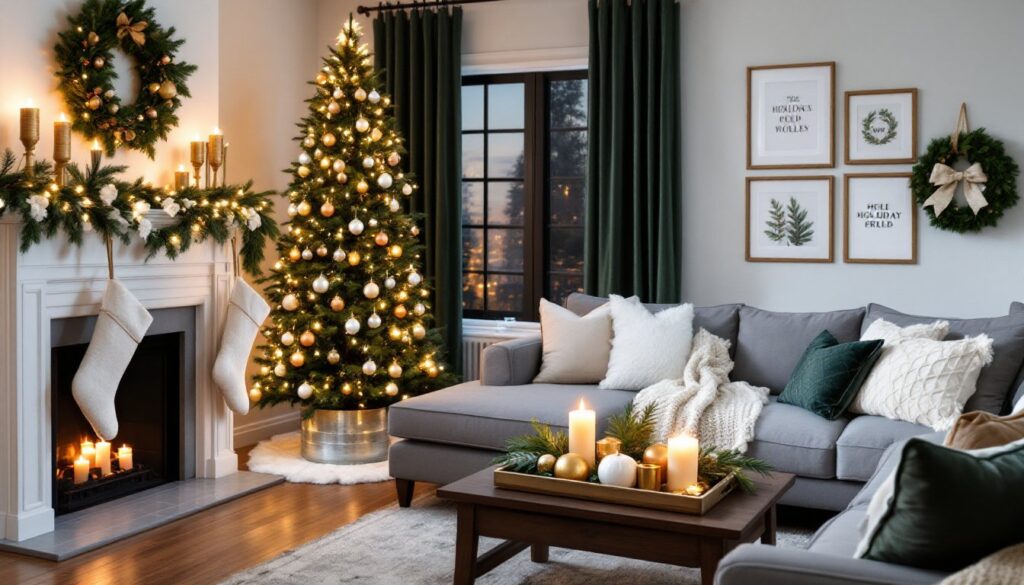
Lighting first: String 100 lights per vertical foot of tree (a 7-footer needs roughly 700 lights). Start from the base of the trunk, weaving strands in and out toward branch tips, not just wrapping the perimeter. Use warm white LEDs for a traditional glow or multicolor for family-friendly vibrancy. Test all strands before decorating, hunting for a dead bulb through laden branches wastes hours.
Layering ornaments: Hang larger, heavier ornaments deep inside the tree on sturdy branches near the trunk. Mid-size pieces go on mid-level branches. Small, delicate ornaments hang near tips where they catch light. This creates visual depth rather than a flat surface of color.
Adding custom lighting accents around the tree base, like battery-powered LED strips in glass hurricanes or under a tree collar, extends the glow without overloading circuits.
Tree skirts and collars: A galvanized metal collar or woven basket hides the stand while adding texture. Traditional fabric skirts work but gather dust: washable cotton or faux fur versions simplify cleanup. For a minimalist look, wrap the base in a heavyweight linen or burlap secured with jute rope.
Decorate Your Mantel and Fireplace Area
Mantels offer a natural focal point second only to the tree. Treat the setup as a layered display, not a lineup of tchotchkes.
Garland as the foundation: Drape fresh or artificial evergreen garland across the mantel, letting it cascade slightly at the ends. Anchor it with floral wire or removable adhesive hooks (check weight limits, fresh garland is heavy when wet). Weave in battery-powered fairy lights before adding other elements: running extension cords across a mantel looks sloppy and poses a fire hazard.
Layering height and texture: Place tall candlesticks or lanterns at varying heights, group in odd numbers (three or five) for visual balance. Intersperse smaller items like wooden signs, framed holiday prints, or small potted evergreens. Lean a large mirror or artwork against the wall behind the garland to reflect light and add depth.
Many designers recommend decorating ideas that emphasize festive elements like natural greenery and layered textures for mantels.
Stockings: Hang from stocking holders rather than nails or thumbtacks, which damage mantels and risk dropping stockings into an active fire. Weighted holders with rubber feet protect finished wood. If hanging from brick, use removable brick clips rated for the combined weight of filled stockings. Space them evenly and step back to check alignment, eyeballing from two feet away doesn’t work.
Fireplace safety: Keep all flammable materials, garland, stockings, fabric, at least 12 inches from the firebox opening. If using real candles on the mantel, never leave them burning unattended, and ensure they’re in stable, non-tip holders. Battery-operated LED pillar candles offer realistic flicker without the risk, especially in homes with pets or young kids.
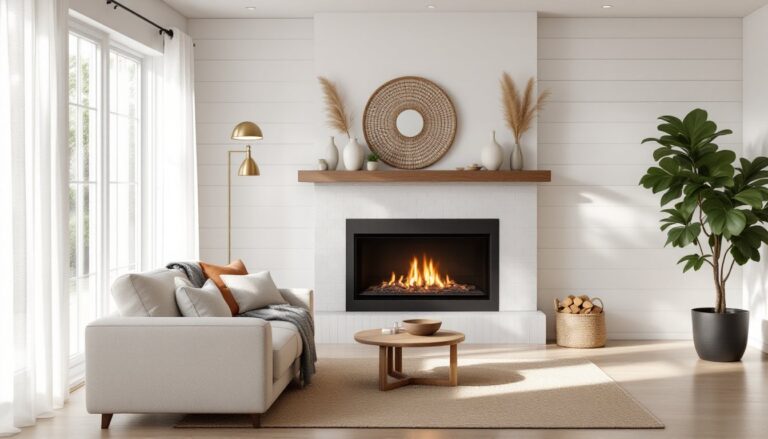
For non-working fireplaces, fill the firebox with stacked birch logs, oversized ornaments in a wire basket, or a cluster of lanterns with LED candles. It adds a finished look without requiring a functioning flue.
Add Festive Touches to Windows and Walls
Windows and walls offer square footage that often goes underused during the holidays.
Window treatments: Swap everyday curtains for heavyweight linen or velvet panels in seasonal colors, forest green, burgundy, or cream. If keeping existing curtains, add a valance or swag of evergreen garland across the top of the window frame, secured with small cup hooks or tension rods.
String icicle lights or net lights inside window frames for an outward glow visible from the street. Use clear suction cup hooks rated for light strings and remove them before direct sunlight causes adhesive failure. In apartment living rooms, battery-powered LED window candles avoid outlet limitations and don’t trip breakers when multiple strands run simultaneously.
Wall décor: Create a gallery wall of holiday prints, vintage Christmas cards in matching frames, or a DIY advent calendar using numbered envelopes pinned to a fabric board. Use removable picture hanging strips rated for the frame weight to avoid patching nail holes come January.
Wreaths: Hang wreaths on interior walls using an over-the-door wreath hanger or a removable adhesive hook. For heavier fresh wreaths, a small finish nail countersunk and puttied later is more secure. Mix wreath sizes, pair a large 24-inch wreath on the main wall with smaller 12-inch versions flanking it.
Expert decorators often suggest creating cohesive displays by repeating design elements like greenery and ribbon across windows and walls.
Vertical greenery: If wall space is tight, suspend a garland swag from ceiling hooks in front of a blank wall, letting it hang in a gentle arc. Accent with pinecones, ribbon bows, or small ornaments wired into the greenery.
Layer in Cozy Textiles and Seasonal Accents
Textiles shift a room’s mood fast and store easier than hard décor.
Throw pillows and blankets: Swap out everyday pillows for velvet, faux fur, or cable-knit covers in holiday colors. Use 18×18-inch or 20×20-inch inserts, anything smaller looks skimpy on standard sofas. Layer two or three pillows per seat, mixing patterns (plaid with solid, geometric with texture) but keeping the color palette consistent.
Drape a chunky knit throw or faux fur blanket over the sofa arm or in a basket beside the seating area. Choose machine-washable fabrics, holiday hosting means spills.
Area rugs: If budget allows, layer a smaller festive rug over the existing area rug. A red or green plaid runner in front of the fireplace or under the coffee table adds warmth without committing to a full room rug. Secure with rug gripper pads to prevent slipping on hardwood or tile.
Table surfaces: Style the coffee table with a wooden tray holding a small vase of fresh evergreen clippings, a few ornaments, and a scented candle (pine, cinnamon, or balsam fir). Keep the arrangement low, under 12 inches, so it doesn’t block conversation sightlines. Side tables get a single item: a small potted poinsettia, a ceramic Santa, or a stack of holiday-themed books with an ornament on top.
Scent layers: Beyond candles, try a stovetop simmer pot (water, orange slices, cinnamon sticks, cloves). It humidifies dry winter air while scenting the space. Alternatively, tuck cedar sachets into throw pillow covers or hang them from cabinet knobs for a subtle woodland scent. Avoid plug-in air fresheners that overpower and read as artificial in stylish living room setups meant to feel curated.
Incorporate DIY Christmas Decorations
DIY projects stretch budgets and let homeowners customize to fit odd spaces or specific color schemes.
Painted wood slice ornaments: Cut 3-4 inch rounds from a downed branch using a miter saw or handsaw. Sand lightly with 120-grit sandpaper, drill a small hole near the edge, and paint simple designs (snowflakes, trees, or initials) with acrylic craft paint. Seal with a matte spray varnish, thread with twine, and hang on the tree or garland. A single branch yields a dozen ornaments.
Mason jar luminaries: Clean pint-size Mason jars, coat the exterior with Mod Podge, and roll in Epsom salt for a frosted look. Drop in a battery-operated tea light. Group three or five on a tray for a mantel or windowsill display. Alternatively, fill jars with mini ornaments, fairy lights, or cranberries and water with floating candles (real or LED).
Fabric garland: Cut 2×6-inch strips of holiday fabric (buffalo check, plaid, or solid felt). Fold each strip over a length of jute twine or ribbon and secure with a dab of hot glue. Space strips every 2 inches along the twine. Drape across a window, mantel, or along a stair rail. One yard of fabric makes roughly 20 strips. For more DIY ideas, check resources on home crafting projects.
Pinecone firestarters: Collect large dry pinecones, tie a 6-inch length of cotton string around the base, and dip two-thirds of the cone into melted paraffin wax or old candle stubs (melted in a double boiler, never direct heat). Let cool on parchment paper. Store in a basket by the fireplace. They’re functional and decorative, and guests often ask for the how-to.
Safety note: When working with saws, wear safety glasses and work gloves. For hot glue or melted wax, keep a bowl of cold water nearby in case of burns. Craft in a ventilated area, spray varnish and some paints emit fumes.
Customization tips: DIY projects shine when they echo existing décor. If the room uses cool-toned neutrals, skip the red and green in favor of silver-painted pinecones and white fabric strips. Rustic rooms suit burlap and twine: modern spaces benefit from geometric stenciled designs on wood slices.
Conclusion
Transforming a living room for Christmas comes down to planning the layout, respecting proportions, and layering textures without clutter. Start with a clear color scheme, build around major focal points like the tree and mantel, and use textiles to soften hard surfaces. DIY touches add personality and fill in gaps that store-bought décor misses. Done right, the space welcomes guests and holds up to daily family use, no tiptoeing around fragile displays or wrestling with tangled lights at midnight.