Table of Contents
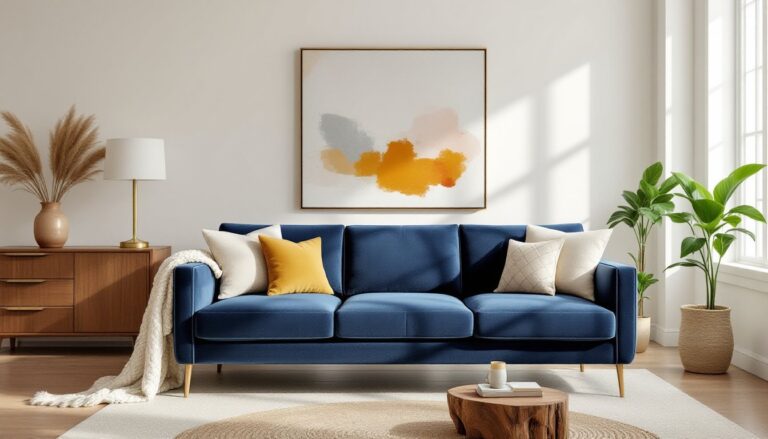
ToggleA dark blue couch anchors a living room like nothing else, it’s bold, sophisticated, and surprisingly versatile. Whether it’s a deep navy velvet sectional or a midnight blue linen three-seater, this piece demands attention without overwhelming the space. But here’s the thing: styling around a statement sofa takes more than tossing a few pillows on it. The right color palette, textures, flooring, and wall treatments turn that couch from “nice furniture” into the centerpiece of a room people actually want to spend time in. Let’s walk through how to make it work.
Key Takeaways
- A dark blue couch serves as a sophisticated living room anchor that grounds the space while remaining versatile across design styles and hiding wear better than lighter upholstery.
- Complement your dark blue couch with warm neutrals like cream and beige, or bold accents such as mustard yellow and emerald green, plus metallic finishes in brass or copper to enhance the color scheme.
- Style your dark blue couch with 3–5 pillows in varying sizes and textures (mixing solids, patterns, and materials like velvet and linen) paired with casually draped throws for an inviting, intentional look.
- Layer your dark blue couch living room with a properly sized rug (at least 12–18 inches beyond seating), choosing wool for durability or subtle patterns in cream and gray to balance the bold sofa.
- Pair your dark blue couch with white or warm off-white walls as a clean backdrop, or use deep accent walls behind the sofa for drama, then hang large-scale artwork in contrasting warm tones or black-and-white above the seating area.
- Incorporate brass-framed mirrors, natural wood shelving, and plants around your dark blue couch to amplify light, add depth, and create a cohesive living room design that feels curated and lived-in.
Why a Dark Blue Couch Is the Perfect Living Room Anchor
Dark blue sits at the intersection of calm and drama. Unlike lighter blues that read beachy or nursery-soft, navy and midnight tones carry weight. They ground a room the way a charcoal or black sofa would, but with more character and less severity.
This color works across design styles. A tufted navy Chesterfield fits a traditional space: a low-profile sectional in indigo leans modern. The fabric matters, velvet catches light and adds luxury, while linen or cotton blends keep things casual and livable. Leather in dark blue (less common, but available) offers durability for high-traffic homes.
From a practical standpoint, dark upholstery hides wear better than pale neutrals. Spills, pet hair, and daily use show less on navy than on beige or white. That makes it a smart pick for families or anyone who’d rather enjoy their furniture than baby it.
Design experts at Domino frequently highlight how navy sofas bridge the gap between timeless and on-trend, making them a reliable investment piece that won’t look dated in five years.
Color Palettes That Complement a Dark Blue Sofa
Neutral and Warm Tones for a Cozy Atmosphere
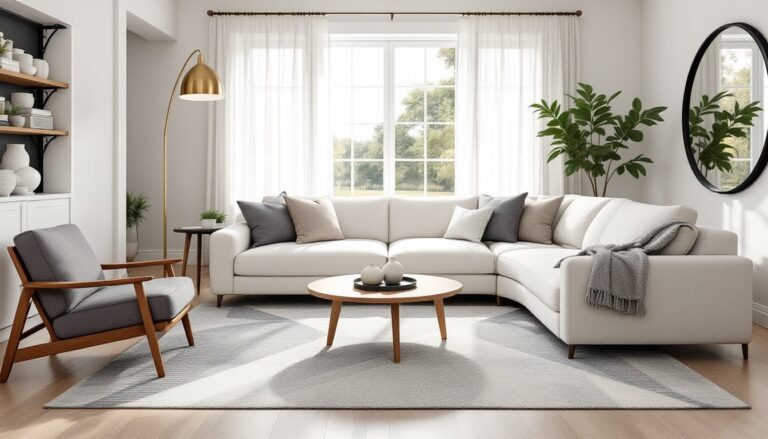
Cream, beige, and warm gray soften the intensity of a navy couch without competing for attention. Think linen curtains in oatmeal, a jute rug, or a soft gray accent chair. These pairings create breathing room and prevent the space from feeling too heavy.
Wood tones, especially walnut, oak, or teak, add warmth. A mid-century sideboard or live-edge coffee table balances the coolness of blue with organic grain and honey tones. Avoid ultra-cool grays or stark white walls if you want a cozy vibe: they’ll make the room feel clinical.
For wall paint, Sherwin-Williams’ Accessible Beige or Benjamin Moore’s Revere Pewter are reliable warm neutrals that let a dark blue sofa pop without clashing. Keep trim and molding in a crisp white or soft cream to define edges.
Layering textures matters here. Pair a chunky knit throw in ivory with linen pillows and a wool rug. The variety keeps neutrals from looking flat, especially important when choosing paint colors for the rest of the room.
Bold and Contrasting Accent Colors
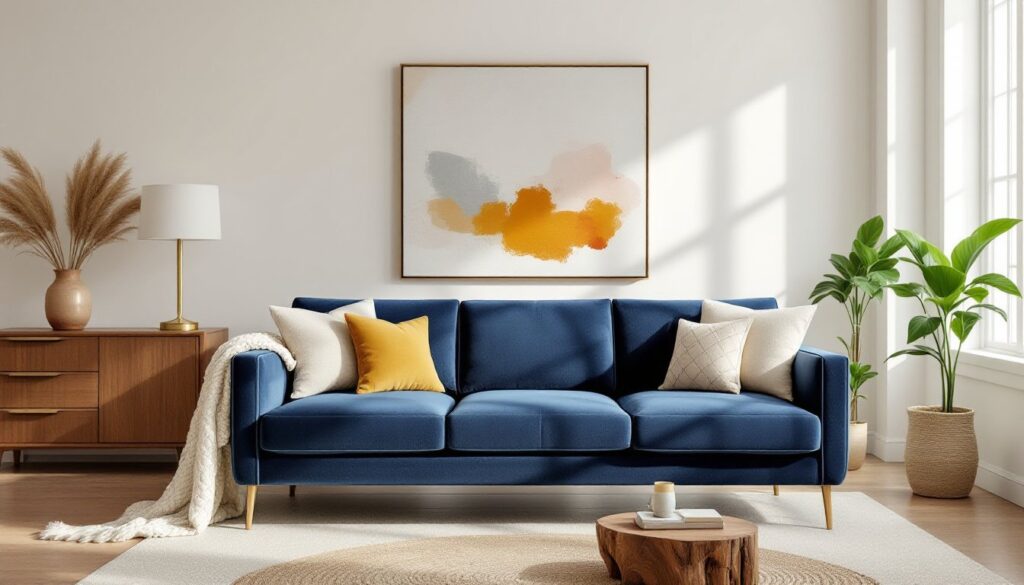
Mustard yellow, burnt orange, and blush pink create striking contrasts against navy. A pair of velvet pillows in goldenrod or a terracotta ceramic vase adds punch without requiring a full repaint. These warm accents energize the room and prevent the blue from reading too nautical.
Emerald green and deep plum work if you want a moody, layered look. Think jewel tones, sapphire rug, amethyst throw, jade plant in a brass planter. This approach leans maximalist, so balance it with neutral walls and minimal clutter.
Metallic finishes, brass, copper, or brushed gold, bring warmth and a bit of glam. A gold-framed mirror, copper floor lamp, or brass side table reflects light and plays well with blue’s undertones. Avoid cool-toned metals like chrome or nickel unless you’re aiming for an industrial edge.
If you’re working with an open floor plan, accent colors help define zones. Designers often use bold living room choices to create visual separation without walls.
Styling Your Dark Blue Couch with Pillows and Throws
Start with odd numbers, three to five pillows per seating section. Too many and it’s a chore to sit down: too few and the couch looks bare. Mix sizes: 22-inch square pillows in back, 18-inch or lumbar pillows in front. This creates depth and looks intentional, not like you grabbed whatever was on sale.
Pattern and texture do the heavy lifting. Pair a solid velvet pillow with a geometric linen print and a faux fur accent. If the couch itself is patterned (less common with dark blue, but it happens), stick to solids or subtle textures in the pillows.
Color-wise, pull from the palettes mentioned earlier: warm neutrals for calm, bold accents for energy. A classic combo: two cream pillows, two mustard, one patterned in both tones. Avoid matching everything exactly, it reads staged, not lived-in.
Throws should drape casually, not be folded into perfect thirds. A chunky cable-knit blanket in ivory or camel adds warmth and invites use. Toss it over one arm or the back of the couch. Materials like wool, cotton waffle weave, or faux fur work year-round: save heavy fleece for winter if you swap seasonally.
Pro tip: wash or steam new textiles before styling. Stiff, fresh-from-the-package fabrics photograph well but feel uninviting. A little rumpling goes a long way.
Choosing the Right Rug and Flooring Combinations
The rug should extend at least 12 to 18 inches beyond the couch on all sides, or anchor the front legs of all seating. A too-small rug makes furniture look like it’s floating. For a standard 8×10-foot living room, a 9×12-foot rug usually works: larger spaces may need 10×14 or bigger.
Material and pattern depend on traffic and style. Wool rugs hold up to wear and clean well, look for a tight weave if you have pets or kids. Jute or sisal adds texture but can be rough underfoot: layer a softer hide or smaller rug on top if that’s a concern. Avoid high-pile shags under a heavy couch, they crush and look matted within months.
Color-wise, a cream or beige rug keeps things light and balances the dark sofa. If you want pattern, go for subtle: a faded Persian, geometric lines in gray and white, or a low-contrast stripe. Bold or busy rugs compete with the couch: save those for rooms with neutral furniture.
Flooring underneath matters. Hardwood in medium to dark tones (walnut, espresso oak) anchors the blue without clashing. Light oak or blonde wood can work but needs warm-toned rugs and accessories to tie it together. If you’re working with existing carpet, a dark blue couch pairs best with beige, gray, or taupe, avoid blue-toned carpet unless you want a monochrome look.
For open-plan spaces where the living room flows into a dining area, rugs help define zones. Homeowners often explore layout ideas to make these transitions seamless.
Wall Colors and Artwork That Enhance a Navy Sofa
White or off-white walls let a dark blue couch shine without closing in the room. Benjamin Moore’s Simply White or Sherwin-Williams’ Pure White are crisp, clean backdrops. If stark white feels too clinical, try a warm white like White Dove or a pale greige.
For more drama, deep charcoal, forest green, or even black accent walls create a moody, enveloping feel. Paint the wall behind the sofa in a dark tone and keep the other three walls light to avoid a cave effect. This works best in rooms with plenty of natural light or high ceilings.
Muted pastels, dusty pink, sage green, or soft terracotta, add subtle color without overwhelming. These shades complement navy’s coolness and pair well with warm wood and brass accents. Test samples in different lighting before committing: what looks perfect at noon may turn muddy at dusk.
According to House Beautiful, layering shades of blue (sky, teal, periwinkle) can work if you vary the saturation and use plenty of white to break it up. But it’s a narrow tightrope, too much blue reads theme-y.
Artwork should contrast in color or tone. Large-scale abstract pieces in warm tones, ochre, rust, blush, pop against navy. Black-and-white photography works for a modern look: botanical prints or landscapes add organic softness. Frame in brass, natural wood, or black depending on your metal accents.
Hang art 6 to 8 inches above the couch back, centered horizontally. For a gallery wall, keep the bottom edge of the lowest frame at that height and build up. Avoid tiny frames scattered randomly, they look unfinished. Three to five pieces in varying sizes, arranged in a loose grid, feels curated.
Mirrors amplify light and make small rooms feel larger. A large round mirror in a brass or wood frame above the sofa reflects windows and brightens the space. Lean an oversized floor mirror against an adjacent wall for a casual, airy vibe.
Shelving or built-ins flanking the couch offer display space for books, plants, and objects. Paint the back of the shelves in a contrasting color, warm terracotta or soft green, to add depth. Style with a mix of heights and textures: tall vases, stacked books, small sculptures, trailing pothos.
For those considering broader room design, exploring cohesive living room ideas can help tie together furniture, walls, and décor into a unified vision.