Table of Contents
ToggleBrick walls bring a layer of history and grit that drywall just can’t match. Whether you’re uncovering original masonry in a century-old rowhouse or installing thin brick veneer in a suburban build, exposed brick adds depth, texture, and character to a living room. It’s not just trendy, it’s proven. Brick pairs well with everything from industrial steel and reclaimed wood to soft linen couches and minimalist shelving. This guide breaks down practical design approaches, decorating strategies, and real installation tips so homeowners can make informed decisions about incorporating brick into their living spaces.
Key Takeaways
- Brick wall living room ideas offer durability, low maintenance, and timeless design appeal that outlasts trends like wallpaper or paint while improving energy efficiency through thermal mass regulation.
- Choose between natural red brick for rustic warmth, painted brick for contemporary aesthetics, or limewashing for a translucent, aged finish that’s easier to refresh than solid paint.
- Treat your brick wall as the room’s anchor by positioning seating to face or flank it, using neutral furniture colors to avoid visual competition, and lighting with warm white bulbs (2700-3000K) to complement the texture.
- Install shelves and artwork using masonry anchors like Tapcon screws and a hammer drill, and balance the brick’s busy texture with a single large art piece rather than a gallery wall.
- Expose hidden brick by carefully removing drywall or plaster while wearing safety gear, or use thin brick veneer as a lighter, more affordable alternative for non-structural accent walls.
- Soften brick’s industrial edges with greenery, natural-fiber rugs, and soft textiles like velvet or linen, and maintain the wall with regular dusting and mild detergent rather than pressure washers.
Why Brick Walls Are Perfect for Modern Living Rooms
Brick offers a rare combination of durability, low maintenance, and visual interest. Unlike wallpaper or accent paint that might feel dated in five years, brick stays relevant across design trends. Its thermal mass also helps regulate indoor temperature, brick absorbs heat during the day and releases it slowly, which can improve energy efficiency in well-insulated homes.
From a design perspective, brick provides built-in texture that reduces the need for layered wall décor. A single exposed brick wall can anchor an entire room, giving furniture and art a grounded backdrop. It works equally well in modern living rooms with sleek lines and in eclectic spaces that mix vintage and contemporary pieces.
Brick also plays well with natural light. The irregular surface catches shadows and highlights throughout the day, creating subtle shifts in tone and depth. In rooms with limited architectural detail, an exposed brick wall can serve as the primary focal point without additional investment in millwork or built-ins.
One practical note: real brick walls are load-bearing or structural in nature. If you’re considering exposing brick during a renovation, consult a structural engineer or contractor first. Removing plaster or drywall from a brick wall is generally straightforward, but any modifications, like cutting openings or removing sections, require professional assessment to ensure the wall’s integrity remains intact.
Exposed Brick Accent Wall Ideas
Natural Red Brick for Rustic Warmth
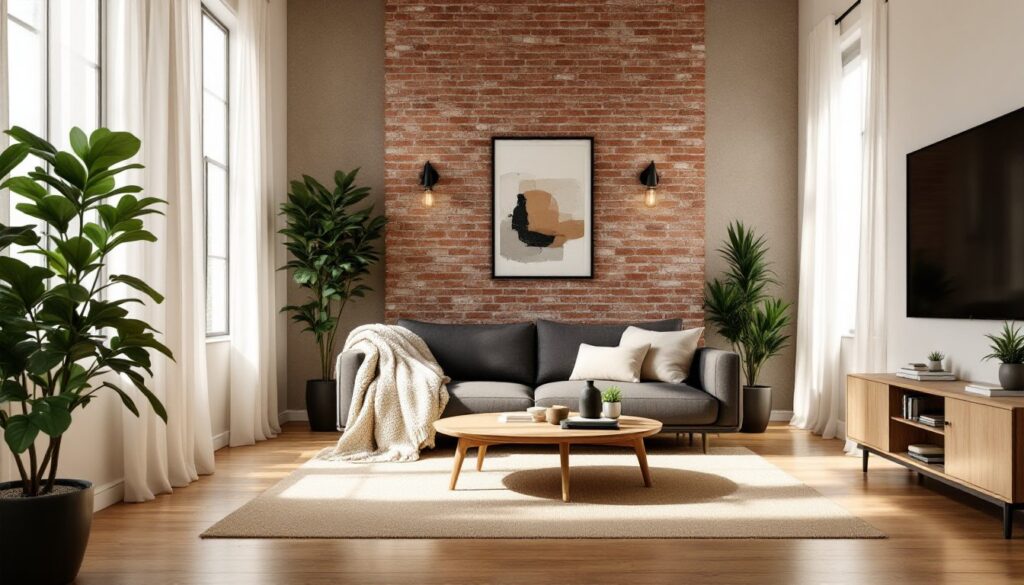
Traditional red brick delivers immediate warmth and pairs naturally with wood tones, leather furniture, and wrought iron accents. This look thrives in loft conversions, older homes with original masonry, and new builds using thin brick veneer.
When working with natural red brick, pay attention to mortar condition. Crumbling or recessed mortar joints should be repointed using Type N mortar, which is appropriate for above-grade interior and exterior walls. Repointing improves structural stability and prevents moisture infiltration. Use a grinder with a diamond blade to remove old mortar to a depth of 3/4 inch, then pack fresh mortar into the joints with a pointing trowel.
Sealing is optional but recommended in high-traffic living rooms. A breathable masonry sealer like silane or siloxane protects against staining without trapping moisture inside the wall. Apply with a pump sprayer or roller, following manufacturer coverage rates, typically 100-200 square feet per gallon depending on brick porosity.
Designers often emphasize diverse living room decor by contrasting the rough texture of red brick with soft textiles, think velvet cushions, wool throws, and linen drapes. The juxtaposition keeps the space from feeling too industrial.
Painted Brick for a Contemporary Look
Painting brick is a one-way street, once painted, it’s nearly impossible to restore the original finish without aggressive sandblasting. That said, painted brick opens up design flexibility. White or light gray paint brightens dark rooms and creates a Scandinavian or coastal vibe. Darker hues like charcoal, navy, or even black add drama and work well in stylish living rooms aiming for a moody, gallery-like aesthetic.
Use 100% acrylic latex masonry paint or mineral-based lime paint for best results. Both allow the brick to breathe, reducing the risk of moisture problems. Avoid standard interior latex, it can trap moisture and lead to efflorescence (white salt deposits) or spalling (brick surface flaking).
Prep work is critical. Clean the brick with a stiff brush and TSP (trisodium phosphate) solution to remove dust, soot, and efflorescence. Rinse thoroughly and let dry for at least 48 hours. Prime with a masonry primer to ensure even coverage and adhesion. Expect to apply two coats of paint, using a roller with a 3/4-inch nap to work into the mortar joints.
One trend gaining traction in 2026: limewashing. This technique uses diluted lime paint to create a translucent, matte finish that lets the brick texture show through. It’s less opaque than solid paint and easier to refresh or remove over time. Mix lime paint with water at a 1:1 ratio and apply with a masonry brush in irregular strokes for a soft, aged look.
Decorating Around Your Brick Wall Feature
A brick wall works best when it’s treated as the room’s anchor, not a competing element. Keep furniture arrangements simple and let the brick do the heavy lifting.
Furniture Placement: Position seating to face or flank the brick wall. A low-profile sofa or sectional in neutral tones, beige, gray, or charcoal, won’t fight the texture. Avoid busy patterns on upholstery: the brick already provides visual interest. If the room feels cold, layer in warm wood furniture like a walnut coffee table or oak media console.
Lighting: Brick absorbs light, so adequate illumination is essential. Use a combination of ambient, task, and accent lighting. Recessed LED downlights or track lighting can highlight the brick’s texture, while wall sconces mounted directly on the brick add functional light without cluttering floor space. Warm white bulbs (2700-3000K) complement red brick: cooler tones (3500-4000K) suit painted or whitewashed brick.
Art and Shelving: Mounting shelves or artwork on brick requires masonry anchors. Use sleeve anchors or Tapcon screws for secure installations. Drill pilot holes with a carbide-tipped masonry bit and a hammer drill. For floating shelves, install heavy-duty brackets rated for the load, expect a filled shelf to weigh 20-40 pounds or more.
When hanging art, consider scale. A single large piece (36×48 inches or bigger) balances the brick’s busy texture better than a gallery wall of small frames. Alternatively, lean oversized artwork or mirrors against the brick wall on the floor for a casual, layered look popularized on platforms like Decoist.
Plants and Greenery: Brick pairs exceptionally well with greenery. Large potted plants, fiddle leaf figs, rubber plants, or monstera, soften the hard edges and add life. Wall-mounted planters or trailing plants like pothos can be anchored directly to the brick with masonry hooks.
Rugs and Textiles: Ground the space with a large area rug. Natural fibers like jute, sisal, or wool complement the organic feel of brick. In cooler climates, layering a smaller patterned rug over a neutral base adds warmth without overwhelming the room. Those looking for living room inspiration often find that textiles provide the easiest way to update a brick-walled space seasonally.
DIY Brick Wall Installation and Restoration Tips
Exposing Existing Brick: If your home was built before 1950, there’s a decent chance you have brick hiding under drywall or plaster. Start by cutting a small exploratory hole with a utility knife or oscillating multi-tool to confirm the brick’s condition. Wear safety goggles, a dust mask (N95 or better), and gloves, old plaster often contains horsehair and can be messy.
Remove drywall with a pry bar, working carefully around electrical outlets and switches. For plaster over brick, use a cold chisel and hammer to chip away sections, or rent a rotary hammer with a chisel bit to speed the process. Expect significant dust: seal doorways with plastic sheeting and use a box fan in a window to create negative air pressure.
Once exposed, clean the brick with a wire brush and vacuum. If mortar joints are damaged, repoint as described earlier. Allow fresh mortar to cure for at least 7 days before sealing or painting.
Installing Thin Brick Veneer: Thin brick (also called brick slips or brick tiles) replicates the look of full-depth brick at a fraction of the weight and cost. It’s ideal for non-structural accent walls and adheres directly to drywall or cement board.
Start with a level and chalk line to mark your layout. Dry-fit a few pieces to determine spacing, mortar joints typically range from 3/8 to 1/2 inch. Use thin-set mortar (the same adhesive used for ceramic tile) applied with a 1/4-inch notched trowel. Press each brick firmly and use plastic spacers to maintain consistent joints.
After 24 hours, grout the joints with Type N mortar or pre-mixed brick mortar. Pack mortar into joints with a grout bag (like a pastry bag), then tool the joints with a jointer or the back of a spoon for a concave profile. Wipe excess mortar from brick faces with a damp sponge before it fully sets.
Safety and Codes: Structural changes involving brick walls may require permits, especially if you’re cutting openings, removing sections, or adding lintels. Check with your local building department. According to guidance from sources like House Beautiful, even cosmetic changes such as painting or sealing brick rarely require permits, but it’s always best to confirm.
Cleaning and Maintenance: Brick is low-maintenance but not no-maintenance. Dust regularly with a vacuum brush attachment. For stains, use a mild detergent and soft brush, avoid pressure washers indoors, as high pressure can damage mortar joints. If efflorescence appears, brush it off and address any moisture sources (leaks, condensation) causing the issue.
Those considering a complete room refresh might explore inspiration from neutral living rooms, where muted palettes let brick texture take center stage without competing colors.
Conclusion
Brick walls offer a timeless, textured backdrop that works across design styles and budgets. Whether restoring original masonry, installing thin veneer, or painting existing brick, the key is thoughtful prep work and honest assessment of the room’s needs. Brick isn’t just decorative, it’s structural, thermal, and deeply tactile. Done right, a brick wall becomes the kind of feature that makes a living room feel curated, lived-in, and genuinely yours.