Table of Contents
ToggleApartment living rooms can feel like design puzzles, limited square footage, landlord restrictions, and tight budgets all add up. But transforming a bland rental living room into a space that feels uniquely yours doesn’t require a trust fund or a contractor on speed dial. With smart furniture picks, strategic decor choices, and a willingness to get hands-on, renters can create living rooms that rival anything in a design magazine. The key is working within the constraints: choosing pieces that maximize function, focusing on non-permanent upgrades, and knowing where to spend and where to save.
Key Takeaways
- Cheap living room ideas for apartments prioritize multifunctional furniture and smart shopping—focus on secondhand solid wood pieces, modular sofas, and storage ottomans that maximize limited square footage.
- Budget-friendly decor like layered textiles, area rugs, plants, and affordable wall art add personality without breaking the bank, while one accent wall of paint delivers the highest impact for minimal cost.
- Renter-friendly upgrades like removable wallpaper, peel-and-stick tiles, and strategic lighting with floor lamps and smart bulbs transform spaces without permanent damage to security deposits.
- DIY projects such as floating shelves, custom artwork, and upcycled furniture pieces let renters customize living rooms for under $50 per project while maintaining lease compliance.
- Secondhand shopping at thrift stores and online marketplaces—combined with smart upcycling of dressers, tables, and hardware replacement—creates unique, designer-quality spaces on a fraction of the budget.
Start with Smart Furniture Choices That Won’t Break the Bank
Furniture is the biggest line item in any living room budget, but it’s also where strategic thinking pays off most. Skip the temptation to fill every corner, overfurnishing makes small spaces feel cramped and wastes money on pieces that don’t earn their keep.
Look for secondhand solid wood pieces at thrift stores, estate sales, or online marketplaces. A sturdy oak coffee table from the ’80s might need sanding and a coat of stain, but it’ll outlast particleboard flat-pack furniture by decades. Check joints and drawer slides before buying: wobbly construction isn’t worth hauling home even at bargain prices.
Avoid matchy-matchy furniture sets. They’re overpriced and make spaces look like showroom floors. Mix a neutral sofa with mismatched side chairs or a vintage trunk used as a coffee table. Cohesion comes from a consistent color palette, not identical pieces.
Consider rental-friendly furniture that disassembles easily. Modular sofas, folding bookcases, and stackable storage cubes move between apartments without damage and adapt to different layouts. When lease-hopping is part of life, furniture that fits a 10×12 living room today and a 14×16 space next year is worth the investment.
Maximize Space with Multifunctional Pieces
Multifunctional furniture is the MVP of apartment living. A storage ottoman serves as seating, a footrest, and a place to stash throw blankets. A console table behind the sofa doubles as a workspace or dining surface in a studio layout.
Sofa beds and futons get a bad rap, but modern mechanisms have improved. Look for queen-size frames with at least a 4-inch memory foam mattress, anything thinner leaves guests feeling the frame. Test the conversion mechanism in-store: if it takes two people or a YouTube tutorial to operate, it won’t get used.
Nesting tables offer flexibility without eating floor space. Pull them out when hosting, tuck them away when you need room to move. The same logic applies to folding chairs hung on wall hooks, instant seating that disappears when not needed.
Vertical storage furniture maximizes limited square footage. Tall bookcases draw the eye up and provide display and storage without consuming floor area. Mount them to wall studs with L-brackets rated for the load (check the IRC guidelines for fastener spacing if attaching to drywall with anchors). Most codes require tip-over restraints for furniture over 30 inches tall in rentals, check your lease.
Add Personality with Budget-Friendly Decor and Accessories
Decor is where personality shows up, and it doesn’t require deep pockets. Focus spending on a few statement pieces rather than scattering generic trinkets.
Textiles are the fastest way to add warmth. Layering throw pillows in varied textures, linen, velvet, cotton canvas, creates depth without matching sets. Aim for three to five pillows on a standard sofa: more looks cluttered in small spaces. Throw blankets draped over furniture add color and function for under $30.
Area rugs define zones in open layouts and soften sound in echo-prone apartments. A 5×7 or 6×9 rug fits most apartment living rooms. Make sure the front legs of the sofa and chairs sit on the rug: floating furniture off a too-small rug chops the room visually. Natural fiber rugs like jute or sisal run cheaper than wool and hold up to traffic, though they’re rougher underfoot.
Plants bring life without permanent changes. Pothos, snake plants, and ZZ plants tolerate low light and infrequent watering, ideal for renters who travel or forget to water. Use a mix of floor planters and hanging pots to add greenery at multiple heights. Just watch for water damage on wood floors and sills: use saucers or trays under pots.
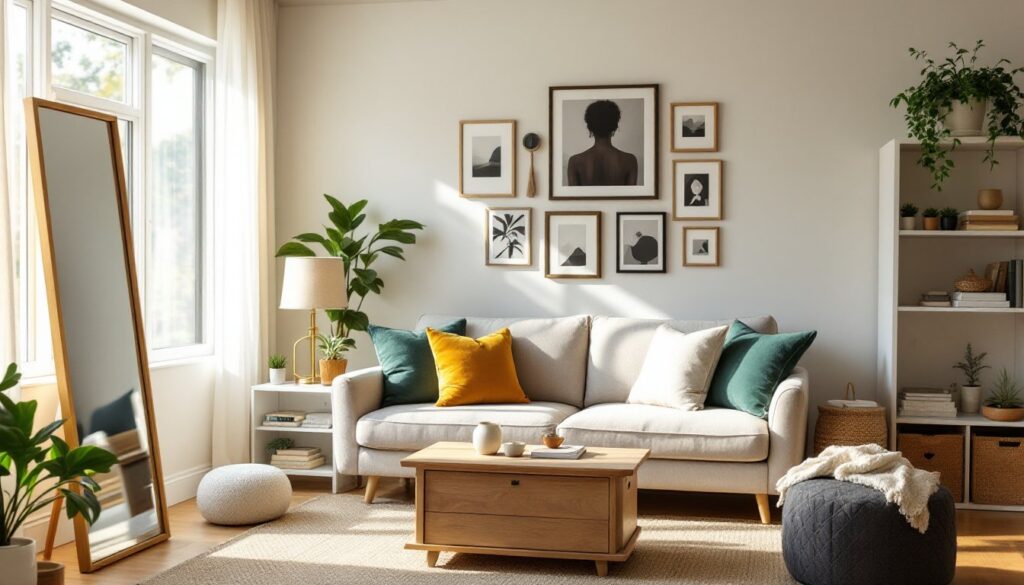
Wall art doesn’t have to be expensive. Print digital art from online marketplaces and frame it yourself. Standard frame sizes like 11×14, 16×20, or 18×24 keep costs down since you can buy frames off the shelf. Create a gallery wall using frames in the same finish but different sizes, variety without chaos. Those pursuing stylish living rooms often use affordable art to personalize rental spaces.
Use Paint and Removable Wallpaper to Make a Statement
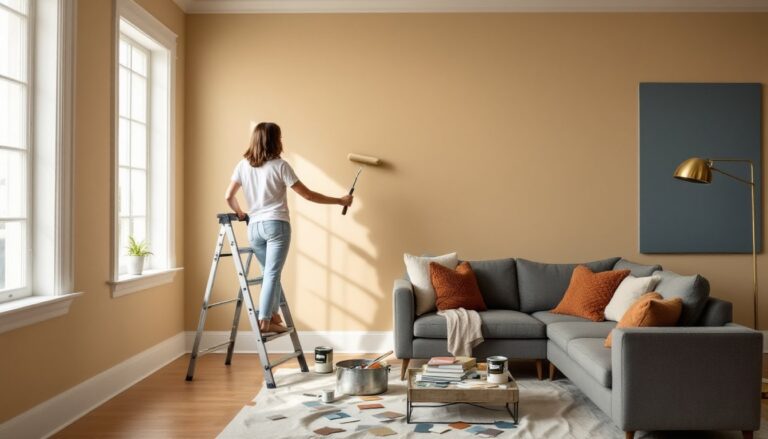
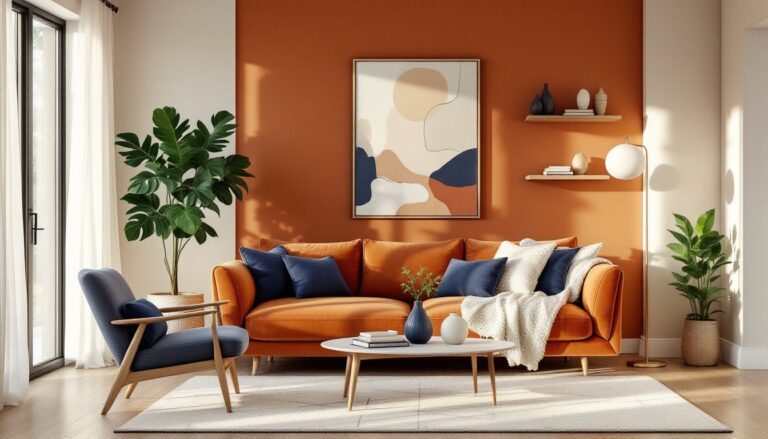
Paint is the highest-impact, lowest-cost upgrade in any space, but most leases restrict wall color. If your landlord allows it, one accent wall in a bold color transforms a room for the cost of a gallon of paint (which covers roughly 350-400 square feet with one coat).
Choose low- or zero-VOC paints for better indoor air quality, especially in apartments with poor ventilation. Brands like Benjamin Moore Natura or Sherwin-Williams Harmony cost a bit more but off-gas less, important when you can’t open windows wide.
Always use primer on rental walls, especially over dark or stained surfaces. It prevents bleed-through and helps the topcoat adhere. A primer-paint combo (often labeled “paint + primer”) works for most applications but won’t block heavy stains, use a stain-blocking primer like Zinsser BIN for those.
Removable wallpaper (peel-and-stick) is a renter’s best friend. It installs without paste or water, peels off cleanly, and comes in endless patterns. Application is straightforward: clean the wall with TSP substitute or diluted dish soap, let it dry, then apply from top to bottom, smoothing bubbles with a plastic smoother or credit card. Some products leave slight residue on textured walls, test a small section first.
Wainscoting or board-and-batten can be done with removable materials. Use paintable peel-and-stick panels or attach lightweight trim with Command strips rated for the weight (check manufacturer load limits). This adds architectural interest without nails or glue that violate lease terms. Budget makeovers on platforms like Young House Love often feature creative paint techniques that renters can replicate.
Create the Illusion of Space with Lighting and Mirrors
Lighting transforms perceived room size and mood. Most apartments come with builder-grade overhead fixtures that cast harsh, flat light, the enemy of ambiance.
Layer lighting at three levels: ambient (overhead or ceiling), task (reading lamps, desk lights), and accent (spotlights on art, uplights behind furniture). This creates depth and lets occupants adjust lighting for activities. In apartments where ceiling fixture replacement isn’t allowed, plug-in pendant lights with swag hooks work beautifully. Install the hook into a ceiling joist (use a stud finder to locate, then drive a screw eye rated for at least 10 lbs), drape the cord, and you’ve got custom lighting without hardwiring.
Floor and table lamps are renters’ go-to lighting upgrades. Look for lamps with three-way bulbs (50/100/150 watts, or LED equivalent) for adjustable brightness. Warm white LEDs (2700-3000K color temperature) mimic incandescent bulbs and feel cozier than daylight LEDs.
Dimmer switches aren’t typically allowed in rentals, but smart bulbs with dimming capability via app control work in any fixture. Brands like Philips Hue or LIFX let renters adjust brightness and color without touching the wiring, just screw in the bulb.
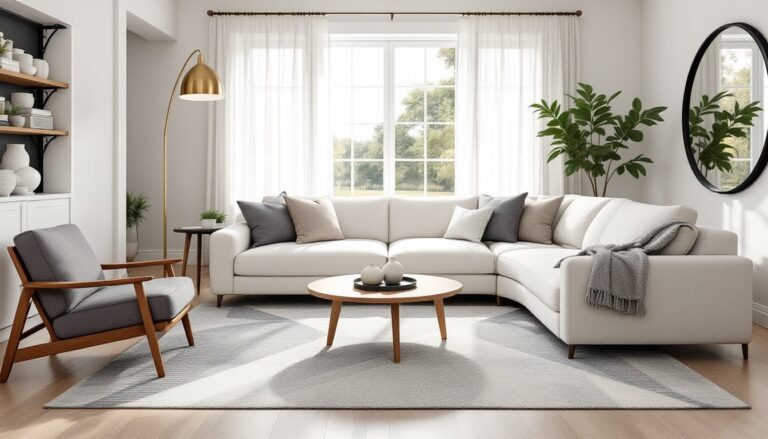
Mirrors are optical magic. A large mirror opposite a window reflects natural light and visually doubles the space. Lean an oversized floor mirror (at least 30×60 inches) against a wall rather than hanging it, no holes, easy to move. Make sure it’s secured with anti-tip straps attached to wall studs: a falling mirror is both dangerous and an expensive security deposit deduction.
Mirrored furniture like console tables or side tables bounces light around while serving function. Use sparingly, too much reflection feels cold and busy. Integrating LED lights in living room designs can enhance both function and ambiance on a budget.
DIY Projects That Elevate Your Living Room for Less
DIY projects let renters customize without contractor bills, but focus on reversible or portable upgrades.
Build a floating shelf using 1×8 or 1×10 pine boards (actual dimensions 3/4″ × 7.25″ or 3/4″ × 9.25″) and heavy-duty floating shelf brackets. Locate studs with a stud finder, mark bracket placement, drill pilot holes, and screw brackets into studs using 3-inch wood screws. Slide the board onto the brackets and secure from below with screws through pre-drilled holes. A 48-inch shelf costs under $30 in materials and adds display space without taking floor area.
Create custom artwork with a canvas, painter’s tape, and acrylic paint. Geometric patterns, abstract color blocking, or even a single bold color in an oversized frame (think 30×40 inches or larger) makes a statement. Total cost: under $40 for materials.
Reupholster throw pillows using fabric remnants from fabric stores (often under $10/yard on clearance). Cut fabric 1 inch larger than pillow forms, sew three sides, insert form, hand-stitch the opening. No sewing machine? Use fabric glue or iron-on hem tape, not as durable but functional for decorative pillows.
Build a DIY coffee table from reclaimed materials. A pallet (free from loading docks, just ask) sanded smooth and stained makes a rustic table base. Add hairpin legs (available online for $20-40/set) or stack two pallets for height. Sand thoroughly with 120-grit sandpaper to avoid splinters, wipe clean, then apply polyurethane or Danish oil for protection. The entire project costs under $50.
Install peel-and-stick tile on a side table or tray for a custom look. Clean the surface with rubbing alcohol, apply tiles from center outward, press firmly. Seal with a clear polyurethane topcoat for durability. DIY enthusiasts at Addicted 2 Decorating regularly tackle similar budget-friendly projects with step-by-step tutorials.
Shop Secondhand and Upcycle for Unique Finds
Secondhand shopping is where budget meets character. Thrift stores, estate sales, Facebook Marketplace, and Craigslist are treasure troves for patient hunters.
Know what’s worth buying used: solid wood furniture, vintage glassware, frames, mirrors, rugs (if cleanable), and lamps. Skip upholstered furniture unless you can verify it’s bedbug-free and you’re prepared to deep-clean it. Mattresses and pillows are hard no’s, health and hygiene risks aren’t worth savings.
Inspect before buying. Check drawers for smooth operation, test chair stability, look for water damage or veneer lifting on wood. Solid wood furniture feels heavy and shows end grain at edges: veneer or particleboard is lighter and shows a printed grain pattern. A sturdy piece with ugly finish is a better buy than pretty particleboard that’ll fall apart in a year.
Upcycling transforms dated pieces into custom furniture. A mid-century dresser with good bones but ugly brass hardware becomes modern with new knobs and a coat of paint. Use TSP (trisodium phosphate) substitute to clean and degloss the surface, sand lightly with 220-grit sandpaper, apply a bonding primer like Zinsser 123, then topcoat with latex or chalk paint. Two coats minimum, light sanding between. Finish with a water-based polyurethane if the surface will see wear.
Refinish wood tables by stripping old finish (use Citristrip or similar low-odor stripper in a well-ventilated area, wear nitrile gloves and a respirator), sanding progressively from 80-grit to 120-grit to 220-grit, then applying stain and topcoat. This takes a weekend but transforms a $30 table into a $300 look.
Replace hardware on furniture and cabinets for instant upgrades. Measure hole spacing (center-to-center distance, called “center-on-center” or “cc” in hardware specs) before shopping. Knobs run $2-8 each, pulls $3-12. Matte black, brass, or brushed nickel finishes look current and work across styles. Making smart picks when furnishing apartment living rooms often involves blending secondhand finds with new accents for a curated look.