Table of Contents
ToggleA cozy living room doesn’t happen by accident. It’s not about throwing a fuzzy blanket on the sofa and calling it done. Real warmth comes from intentional choices, how light bounces around the room, where furniture lands in relation to conversation flow, and which textures meet the eye and hand. Whether tackling a full redesign or tweaking a space that feels off, understanding the mechanics of coziness makes the difference between a room that looks nice in photos and one people actually want to linger in.
Key Takeaways
- Cozy living room design is built on intentional choices about scale, visual weight, and sensory elements rather than aesthetic accident—furniture should fill 60-70% of floor area to create comfort without awkward voids.
- Warm color palettes with red and yellow undertones, paired with matte paint finishes and strategic accent walls, make spaces feel more inviting than cool grays or stark whites.
- Layering textures through rugs, upholstered furniture, curtains, and tactile details (boucle pillows, woven baskets) creates visual depth and prevents sterile, showroom-like aesthetics.
- Multi-level lighting with dimmers and warm white bulbs (2700K-3000K) is essential to cozy living room design—overhead fixtures alone create harsh shadows that destroy ambiance.
- Furniture arrangement should prioritize conversation flow with seating in U or L shapes 8-10 feet apart, pulled 12-24 inches from walls to foster intimacy rather than institutional perimeter layouts.
- Personal, lived-in touches like worn books, curated gallery walls, and meaningful accessories transform a cozy living room from a showroom into a retreat that reflects actual use and history.
What Makes a Living Room Feel Cozy?
Coziness isn’t subjective fluff, it’s a measurable outcome of specific design decisions. The difference between a cold, uninviting space and one that feels like a retreat comes down to scale, proportion, and sensory input.
Scale matters first. Oversized furniture in a small room creates claustrophobia, not comfort. Conversely, undersized pieces in a large space make it feel like a waiting room. Furniture should fill roughly 60-70% of the floor area, leaving enough circulation space without creating awkward voids.
Visual weight plays an equally critical role. A room full of glass and chrome reads as sleek, not cozy. Introducing materials with heft, solid wood coffee tables, upholstered armchairs, thick-weave rugs, grounds the space. These elements literally and visually anchor the room.
Temperature perception isn’t just about the thermostat. Hard surfaces (tile, concrete, bare walls) reflect sound and feel cool. Soft surfaces (rugs, curtains, upholstery) absorb sound and read as warmer, even when room temperature stays constant. For maximum coziness, at least 40% of visible surfaces should be textile or porous material.
Choosing the Right Color Palette for Warmth
Paint is the cheapest lever for changing how a room feels, but color choice isn’t just aesthetic. It affects perceived room temperature and spatial depth.
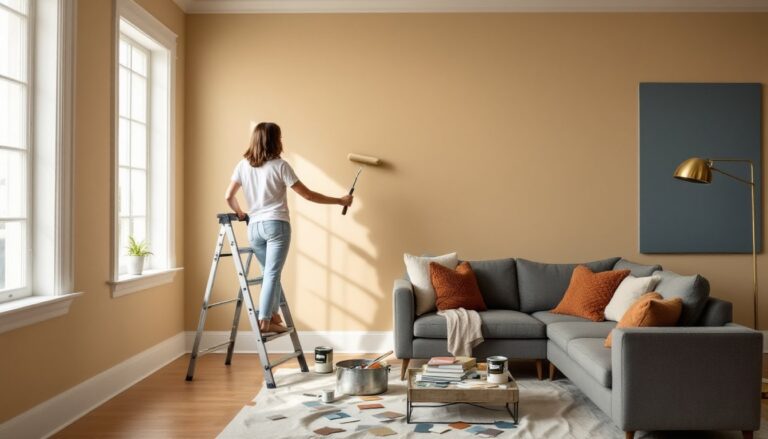
Warm neutrals (beiges, taupes, greiges) work because they contain red and yellow undertones. These wavelengths literally register as warmer to the human eye. Cool grays and stark whites can look clean but often feel clinical. If sticking with gray, choose one with a warm undertone, test by comparing paint chips against pure white paper. If the gray looks slightly brownish or peachy, it’s warm.
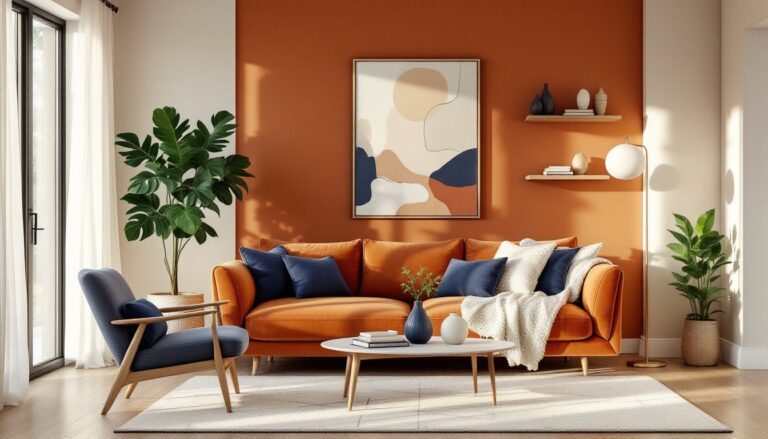
Deep accent walls create intimacy, especially in neutral living rooms where layering becomes essential. Navy, charcoal, or forest green on one wall makes the space feel enclosed in a good way, like wrapping in a blanket. According to Domino, pairing rich accent colors with lighter adjacent walls prevents the room from feeling cave-like.
Paint sheen affects warmth too. Flat or matte finishes absorb light, making colors feel deeper and softer. Satin and semi-gloss reflect light, which can feel colder and more formal. For living room walls, stick with matte or eggshell (10-25% sheen).
One gallon of paint typically covers 350-400 square feet with one coat. Most color changes require two coats, so budget accordingly. Always prime if switching between drastically different colors or painting over glossy surfaces.
Layering Textures and Fabrics for Comfort
Texture layering is where cozy living rooms separate from showrooms. A single-texture space, leather sofa, glass table, smooth walls, feels sterile regardless of layout.
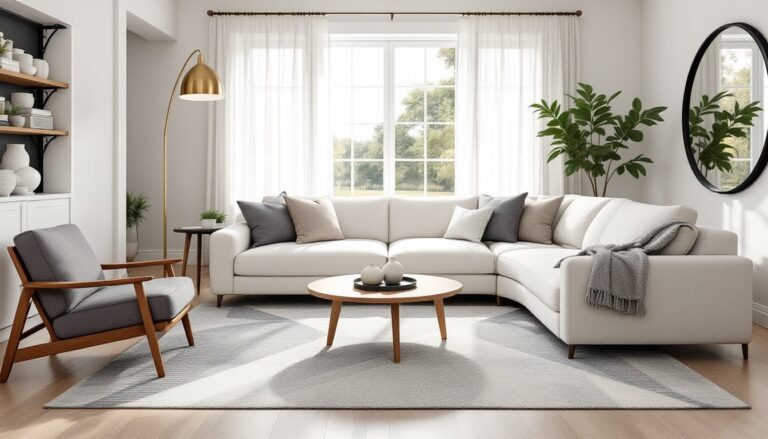
Start with a foundational rug. Wool or wool-blend rugs in medium to high pile (0.5-0.75 inches) provide both visual and literal warmth underfoot. Size matters: the rug should extend at least 6-12 inches beyond the front legs of sofas and chairs. An 8×10 rug fits most standard living rooms (12×15 feet), while larger spaces need 9×12 or sectional-sized options.
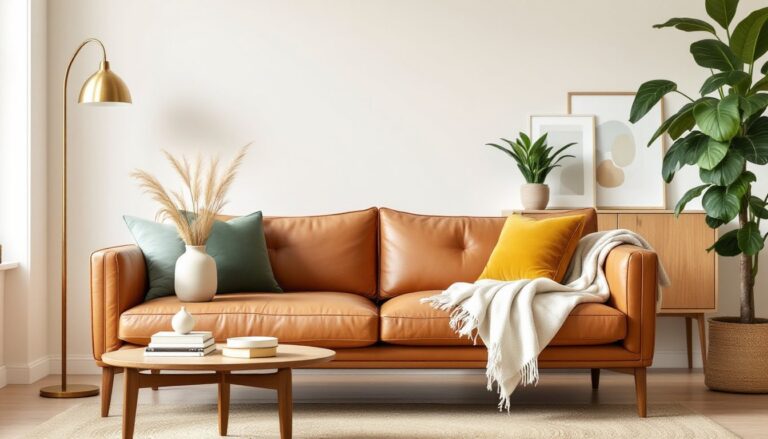
Upholstery mix creates visual interest. Pair smooth leather or microfiber with textured linen or velvet. If the sofa is smooth, add chunky knit throw blankets (not thin fleece, those read as cheap). Pile them loosely rather than folding perfectly. Real coziness looks slightly undone.
Curtains add softness to hard architectural lines. Linen or velvet panels in floor-length installs (hanging from as close to the ceiling as possible) make walls feel taller and the room more finished. For maximum warmth, choose curtains with blackout or thermal lining, these improve insulation and muffle outside noise.
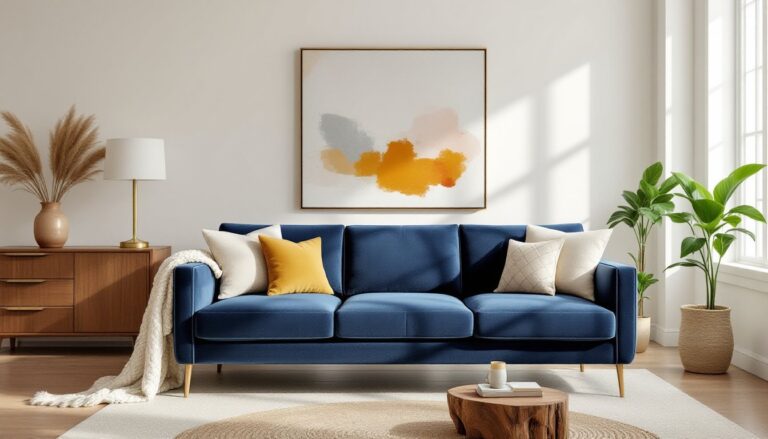
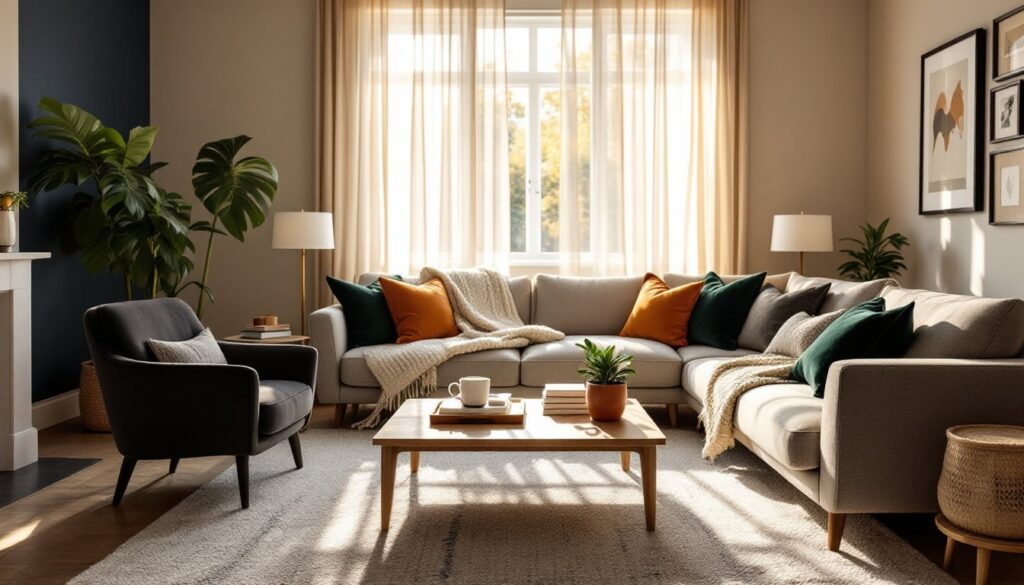
Don’t forget tactile details: nubby boucle pillows, jute baskets, woven wall hangings. These aren’t filler. Each material catches light differently, creating depth. Shoot for at least five distinct textures visible from the sofa.
Lighting Strategies to Create Ambiance
Overhead lighting alone kills coziness. Period. A single ceiling fixture creates harsh shadows and flat illumination, exactly what makes waiting rooms feel institutional.
Layer light sources at three levels: ambient (ceiling), task (reading lamps), and accent (picture lights, sconces). For a standard 200-square-foot living room, plan for 4,000-6,000 lumens total output, but spread across multiple fixtures rather than one blinding can light.
Dimmers are non-negotiable. Installing a dimmer switch takes 15 minutes and costs $15-30. It’s the single highest-ROI upgrade for ambiance. Even LED bulbs work with most modern dimmers (check compatibility, look for “dimmable” on the bulb packaging).
Color temperature matters as much as brightness. Warm white bulbs (2700K-3000K) mimic incandescent glow and feel cozy. Anything above 3500K starts reading as daylight or clinical white, fine for kitchens, wrong for living rooms. Using LED lights in living room designs allows for adjustable color temperature in smart bulbs.
Position lamps strategically: one next to each seating area for reading, one in a dark corner to eliminate shadows, and one on a console or sideboard for ambient fill. According to Homedit, table lamps with fabric shades diffuse light better than metal or glass, creating a softer glow.
Avoid uplighting (torchieres and cans aimed at the ceiling). It’s great for making a room look bigger in real estate photos but terrible for intimacy. Light should pool where people gather, not bleach the ceiling.
Furniture Arrangement for Intimate Conversation
Furniture layout dictates whether people actually use a living room or migrate to the kitchen. The goal: faces should see faces without craning necks.
Avoid the perimeter trap. Pushing all furniture against walls makes the room feel like a middle school dance. Instead, pull seating 12-24 inches away from walls to create intimacy. The exception: in rooms under 150 square feet, one wall-backed piece (usually the sofa) makes sense, but chairs should still float.
Arrange seating in a U-shape or L-shape with no more than 8-10 feet between facing pieces. This distance allows comfortable conversation without shouting. Coffee tables should sit 14-18 inches from the sofa edge, close enough to reach a drink, far enough to avoid knee collisions.
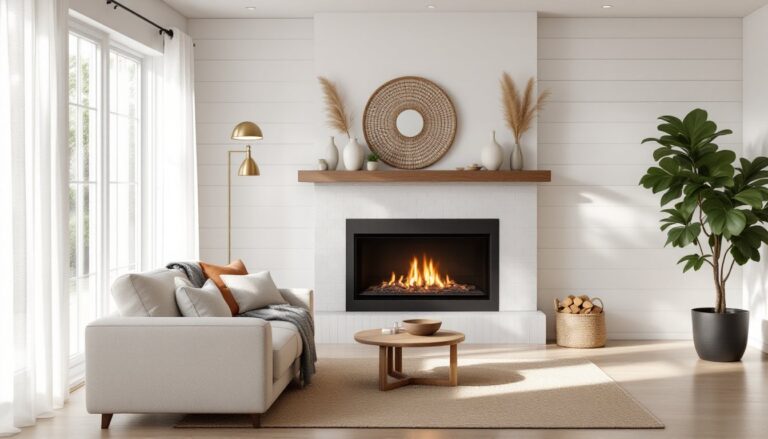
Anchor with a focal point (fireplace, media console, or large window). Angle seating toward it rather than forcing everything parallel to walls. Two chairs angled slightly inward create better conversational flow than placing them perfectly perpendicular.
In open plan living room layouts, use the furniture itself to define zones. The back of a sofa acts as a room divider, signaling where the living area ends and dining begins. Add a console table behind the sofa to reinforce the boundary and provide surface area for lamps or decor.
Traffic flow check: walk the primary path from the entrance through the room. If you’re weaving between furniture or brushing past chair arms, rearrange. Main pathways need 30-36 inches clearance. Secondary paths (between furniture pieces) need 18-24 inches minimum.
Adding Personal Touches and Finishing Details
A cozy room tells a story, not in inspirational-quote-wall-art kind of way, but through objects that reflect actual use and history.
Layered surfaces prevent the model-home sterility. Coffee tables should hold more than one coffee table book. Add a small tray (wood, brass, or ceramic) to corral remotes and coasters, a bowl for keys, a small plant. Side tables need a lamp, a book or two, and one decorative object. Stacking creates visual interest, books under a small sculpture, for instance.
Gallery walls or curated art beat mass-produced prints every time. Mix frame styles and sizes but keep a consistent element (all black frames, or all warm wood tones, or all brass). Hang art with the center at 57-60 inches from the floor, eye level for most people. Use a laser level (or level app on a phone) to avoid the “slightly crooked” problem that plagues DIY hangers.
Design trends featured on House Beautiful emphasize meaningful accessories over clutter. Choose items with purpose or memory: travel finds, family photos in quality frames, vintage pieces from estate sales. Avoid anything that screams “I bought a decor bundle.”
Greenery adds life without taking up cognitive space. Low-maintenance options like pothos, snake plants, or ZZ plants tolerate low light and neglect. For higher-light rooms, fiddle leaf figs or rubber plants make strong statements. Use ceramic or terracotta pots, not plastic nursery containers, the difference is immediate.
Books matter, especially in stylish living rooms where design meets function. Real, read books with worn spines look better than pristine decorative sets. Stack them, shelve them, pile them on side tables. They add color, texture, and proof someone actually lives there.
Conclusion
Coziness isn’t a style, it’s an outcome of deliberate choices about light, texture, scale, and layout. The rooms that feel best aren’t always the ones with the biggest budgets, but the ones where every material, color, and furniture placement serves the goal of comfort. Start with one change, a warm paint color, a layered rug, better lighting, and build from there.