Table of Contents
ToggleArt decor isn’t just about filling wall space, it’s the difference between a living room that feels like a showroom and one that feels like home. The right pieces anchor a room’s design, set the mood, and tell visitors who lives there without saying a word. Whether someone’s working with a blank canvas or refreshing an existing layout, art brings color, texture, and dimension that furniture alone can’t deliver. In 2026, living room art has moved beyond matchy-matchy sets and generic prints, leaning into personal expression, DIY creativity, and budget-savvy solutions that punch above their price point.
Key Takeaways
- Art decor for living room serves as connective tissue that ties together furniture, colors, and finishes while creating focal points that give rooms structure and visual depth.
- Choosing the right art style—whether modern abstract for contemporary spaces or classic artwork for traditional elegance—requires reading your room’s existing architecture, furniture, and color palette.
- Proper art placement and hanging techniques, with artwork centers at 57-60 inches from the floor and 6-8 inches clearance from furniture, ensure your pieces make maximum impact without crowding.
- DIY art projects like framed textile panels, stenciled canvases, and abstract pour painting offer high-impact personalization at minimal cost while injecting individual expression into your living room.
- Budget-friendly art solutions including printable designs ($5-15), thrift store frames, oversized paper prints, and rotating gallery wall systems deliver designer-quality results without premium price tags.
Why Art Decor Is Essential for Your Living Room Design
Art decor functions as the connective tissue in a living room’s design. It pulls together disparate elements, upholstery colors, wood tones, metal finishes, into a cohesive visual story. A well-chosen piece draws the eye upward, making standard 8-foot ceilings feel taller and breaking up expanses of blank drywall that can make even furnished rooms feel unfinished.
Beyond aesthetics, art establishes focal points. In rooms without architectural features like fireplaces or built-ins, a statement piece above the sofa or media console gives the space structure. It directs furniture arrangement and helps define conversation areas in open plan layouts.
Art also introduces layers. Flat paint and solid-color furniture create a one-dimensional feel, but artwork adds depth through texture (canvas weave, paper grain, frame relief) and visual complexity (brushstrokes, patterns, photographic detail). This layering is what separates a styled room from a staged one.
Finally, it’s deeply personal. Unlike architectural decisions or big-ticket furniture, art can reflect hobbies, travel, family history, or simply a color palette someone loves. It’s the easiest way to stamp individuality on a space without committing to permanent changes like paint or built-ins.
Choosing the Right Art Style for Your Living Room
Selecting art style starts with reading the room, literally. A living room’s existing architecture, furniture profile, and color scheme all point toward compatible art categories. Mismatched styles don’t always clash, but intentional pairing creates stronger impact.
Modern and Abstract Art for Contemporary Spaces
Modern and abstract pieces thrive in spaces with clean lines, minimal ornamentation, and neutral palettes. Think geometric prints, large-scale canvases with bold color blocks, or black-and-white photography in slim metal frames. These work particularly well in modern living rooms with furniture featuring low profiles, metal legs, and smooth surfaces.
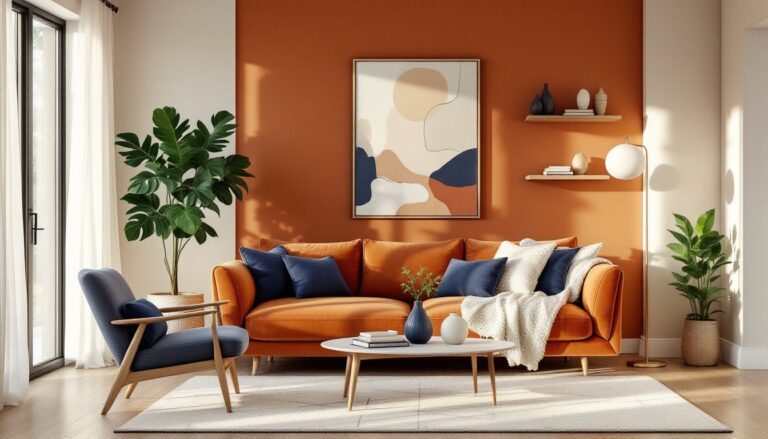
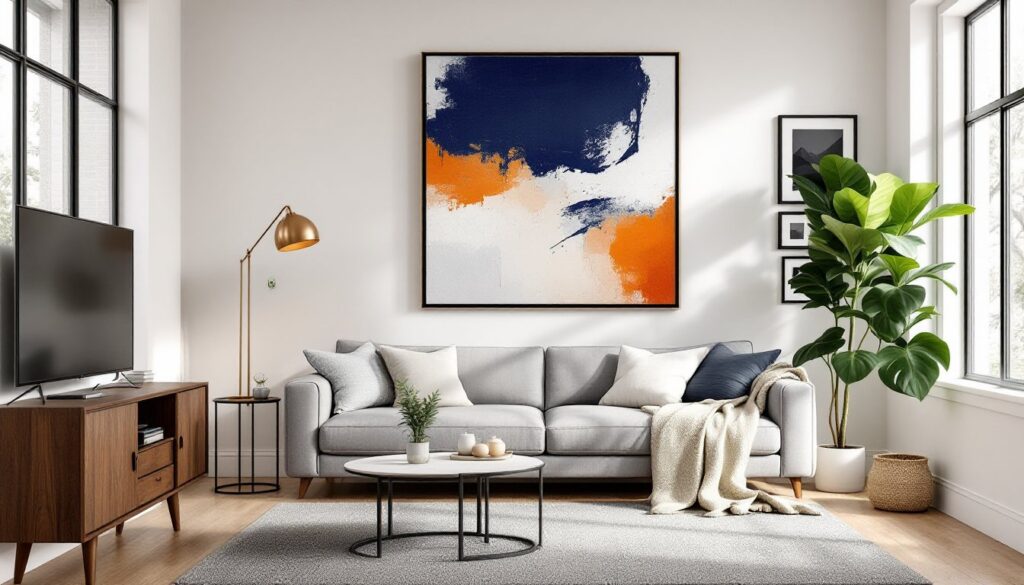
Abstract art offers flexibility, it doesn’t need to “match” anything because it’s non-representational. A canvas with gestural brushstrokes in navy, rust, and cream can tie together a gray sofa, walnut media console, and copper accent table without looking forced. Scale matters here: contemporary design embraces oversized art. A single 60″ x 40″ canvas makes more impact than a cluster of smaller prints in modern settings.
For apartment living rooms with limited square footage, vertical abstract pieces draw the eye upward without overwhelming the floor plan. Avoid fussy frames, floating frames or gallery-wrapped canvases (where the print wraps around the edges) keep the look streamlined.
Classic and Traditional Artwork for Timeless Elegance
Traditional spaces call for artwork with narrative, detail, and ornate framing. Oil paintings with landscapes, still lifes, or portraits fit homes with crown molding, wainscoting, or furniture featuring turned legs and carved details. Gilt frames, beveled mats, and museum glass elevate these pieces.
Color palette should complement existing textiles and finishes. If the room features warm wood tones like cherry or mahogany, look for art with amber, burgundy, or forest green undertones. Cooler spaces with gray or taupe palettes pair well with artwork featuring blue, sage, or muted violet.
Traditional doesn’t mean static. Mixing periods, pairing a 19th-century landscape with mid-century furniture, adds energy, as discussed in contemporary design inspiration sources. The key is maintaining consistent framing and matting quality so the pieces feel intentional rather than random.
For buyers working with neutral living rooms, classic black-and-white photography or charcoal sketches offer traditional sensibility without competing with the understated palette.
How to Arrange and Display Art in Your Living Room
Art placement follows structural logic, not guesswork. Poor hanging is the fastest way to undermine even museum-quality pieces.
Hanging height follows a standard rule: the center of the artwork should sit at 57-60 inches from the floor, which aligns with average eye level. For art above furniture, leave 6-8 inches of clearance between the sofa back or console top and the bottom edge of the frame. This creates visual connection without crowding.
For gallery walls, map the layout on the floor first. Use kraft paper templates taped to the wall to test arrangements before driving nails. Maintain consistent spacing, 2-3 inches between frames creates cohesion. Vary frame sizes but keep a unifying element (all black frames, all wood, or all mats in the same color).
Lighting transforms art from decoration to design feature. Picture lights (battery-powered LED versions eliminate wiring) mounted above frames add drama, while track lighting offers flexibility for changing displays. LED lighting options consume minimal energy and don’t emit UV rays that fade artwork over time.
Layering creates depth. On mantels or consoles, lean smaller framed pieces against the wall in front of larger art. Overlap edges slightly and vary heights with books or decorative objects. This casual approach, popular in stylish living room designs, softens formal arrangements.
For weight considerations, use anchors rated for the load when hanging on drywall. A framed canvas weighing 15+ pounds requires hollow-wall anchors or screws driven into wall studs located 16 inches on center in most residential construction. Use a stud finder, guessing punches unnecessary holes.
DIY Art Decor Projects to Personalize Your Living Room
DIY art slashes costs and injects personality impossible to replicate with mass-produced prints. These projects require minimal skill but deliver outsized impact.
Framed textile panels turn fabric remnants into statement pieces. Stretch canvas drop cloth or linen over pre-made canvas frames (available in standard sizes from 16″ x 20″ up to 30″ x 40″), secure with a staple gun on the back, and frame or leave raw for textural interest. Block-printed or hand-dyed fabrics work particularly well.
Stenciled canvases allow pattern customization. Use painter’s tape to mask off geometric designs, apply acrylic paint with foam rollers for smooth coverage, and peel tape while paint is still slightly wet to prevent lifting. This technique works on raw canvas, wood panels, or even directly on painted walls for large-scale impact.
Photo enlargements personalize spaces affordably. Print personal photos at poster size (24″ x 36″ typically runs $15-30 at print shops) and mount to foam core with spray adhesive. Frame in simple wood or metal frames to elevate the DIY look.
For advanced DIYers, wood burning (pyrography) creates custom designs on birch plywood panels (smooth and knot-free). A basic wood-burning tool costs $20-40. Safety note: work in ventilated areas and wear a dust mask, burning wood releases particulates.
Abstract pour painting requires only acrylic paint, pouring medium, and canvas. Mix paint with medium at 1:1 ratio, pour over tilted canvas, and let gravity create organic patterns. Protect floors with drop cloths, this gets messy. No artistic skill required: the technique does the work.
All DIY art benefits from quality framing. Basic metal sectional frames assemble with screws at corners and cost a fraction of custom framing while maintaining clean, professional presentation.
Budget-Friendly Art Decor Ideas for Every Homeowner
High-impact art doesn’t demand high budgets. Strategic shopping and creative thinking stretch dollars without sacrificing style.
Printable art from online marketplaces offers designer looks at file prices ($5-15). Download, print at local print shops on heavy cardstock (80-lb minimum) or photo paper, and frame. Quality rivals prints marked up 500% at big-box retailers. According to color-focused design strategies, abstract digital prints effectively introduce accent colors into neutral palettes.
Thrift stores and estate sales yield framed art for $5-20. Ignore the existing print, buy for the frame. Remove dated artwork, paint frames to match the room (chalk paint requires no sanding or priming), and insert new prints or fabric.
Large-scale impact on small budgets comes from oversized paper prints mounted to foam board. Engineering print shops produce black-and-white prints up to 36″ wide on roll paper for $3-8 per linear foot. Mount with spray adhesive, trim edges, and hang frameless for industrial-modern appeal. Ideas from home decor resources often emphasize how scale compensates for finish quality in budget projects.
Mirrors as art serve double duty, they reflect light and expand visual space while functioning as decorative objects. Look for interesting frames at discount stores. A 30″ round mirror in a carved wood or rattan frame often costs less than framed art of the same size.
Rotating gallery walls maximize investment. Use picture ledges ($15-30 for 4-foot lengths) instead of hanging art. Swap pieces seasonally or whenever inspiration strikes without patching nail holes. This works particularly well in black living rooms where white or natural wood ledges create strong contrast.
Personal collections as art cost nothing. Shadow boxes displaying vintage tools, ticket stubs, or natural objects (shells, driftwood, pressed botanicals) create narrative-rich displays that spark conversation. Use museum putty to secure three-dimensional objects inside frames.
Regional pricing varies, but these approaches stay cost-effective nationwide. The key is investing effort in sourcing and customization rather than paying retail markups for mass-produced pieces.