Table of Contents
ToggleBoho chic style isn’t about following strict rules, it’s about creating a <a href="https://saverdfc.com/neutral-living-rooms/”>living room that feels collected, lived-in, and authentically yours. This design approach blends natural materials, global textiles, and eclectic finds into a space that’s both comfortable and visually interesting. Whether starting from scratch or refreshing an existing room, understanding the core elements of bohemian design helps turn vague inspiration into a workable plan. The key is layering textures, mixing patterns without chaos, and balancing color with intention. Here’s how to build a boho chic living room that doesn’t look like a catalog page.
Key Takeaways
- Boho chic living room design thrives on layering textures, mixing eclectic finds, and blending natural materials like wood, rattan, and linen without feeling cluttered.
- Start your boho chic living room with warm neutral walls and furniture, then add color and personality through textiles, art, and accessories in jewel tones or earthy accents.
- Layer rugs, pillows, and throws in varying patterns and sizes to create visual warmth and depth—aim for three to five pillow patterns per sofa with a mix of scales and textures.
- Incorporate abundant plants in ceramic or terracotta planters grouped in odd numbers, and use natural materials like driftwood, wood bowls, and woven baskets as both decor and functional storage.
- Finish your boho chic living room with intentional accessories like oversized mirrors, rattan pendants, and curated collections that tell a story rather than fill space.
What Defines the Boho Chic Living Room Style?
Boho chic is a relaxed, maximalist aesthetic rooted in natural materials, handmade pieces, and a mix of cultural influences. It pulls from Moroccan textiles, mid-century furniture, vintage finds, and global crafts, no single origin story, just an intentional clash of patterns and textures.
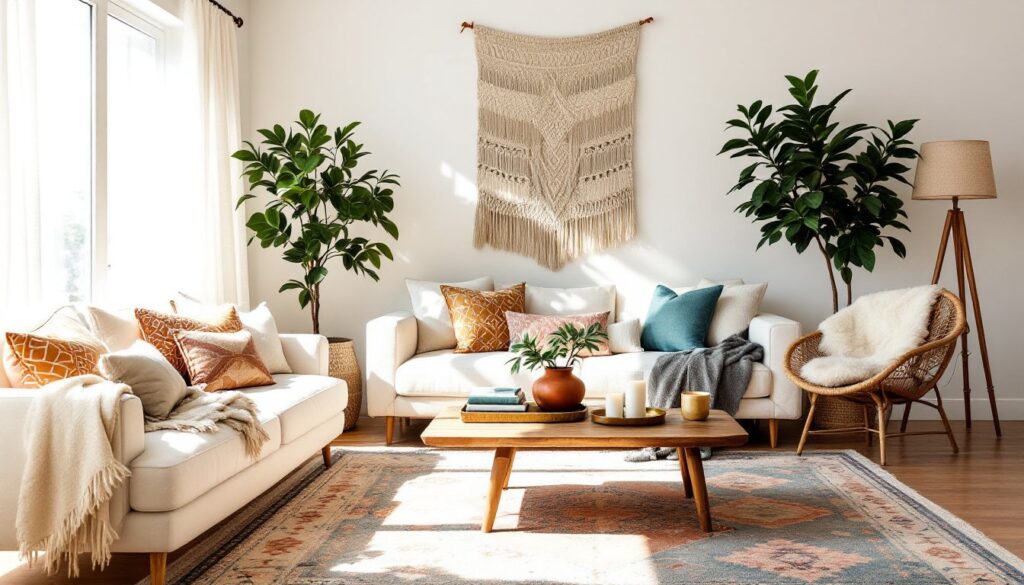
Unlike minimalist styles that strip a room down, boho design layers up. Think woven wall hangings, stacked pillows in different prints, a vintage rug over sisal, and plants in ceramic planters. The style thrives on visual abundance, but it shouldn’t feel cluttered, each piece should earn its spot.
Key characteristics include:
- Natural materials: Wood (teak, rattan, reclaimed), jute, linen, cotton, leather, and stone.
- Handmade or artisan items: Macramé, hand-dyed textiles, pottery, woven baskets.
- Layered textiles: Multiple rugs, throw blankets, floor cushions, and patterned pillows.
- Plants: Lots of them. Pothos, fiddle-leaf figs, succulents, greenery is non-negotiable.
- Eclectic furniture: Mix vintage with new, low-profile seating with taller bookcases, and different wood tones.
Boho chic isn’t a paint-by-numbers approach. It’s more like assembling a curated flea market haul, intentional, but loose enough to evolve.
Color Palettes That Bring Boho Chic to Life
Boho color schemes lean earthy but aren’t afraid of saturation. The palette typically starts with warm neutrals, terracotta, sand, cream, warm gray, then adds punches of jewel tones or muted brights. It’s about balance: too much beige feels flat, too many bold colors feel chaotic.
Common boho palettes:
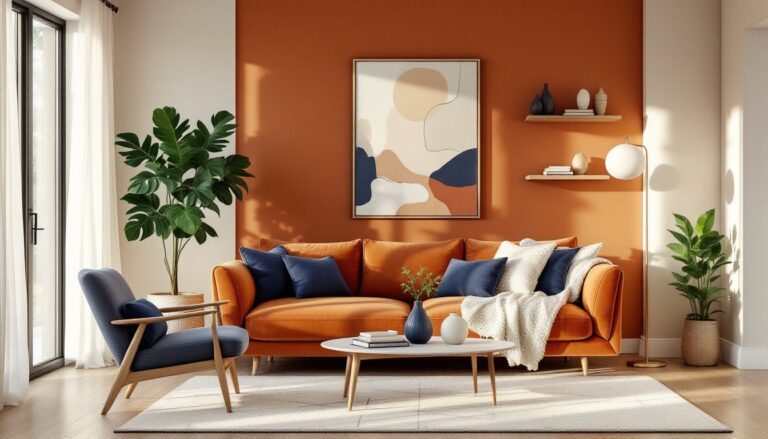
- Earthy neutrals + rust and ochre: Cream walls, terracotta accents, burnt orange pillows, mustard throws.
- Desert tones: Sand, clay, sage green, dusty pink.
- Jewel-toned boho: Emerald, deep teal, plum, gold accents over a neutral base.
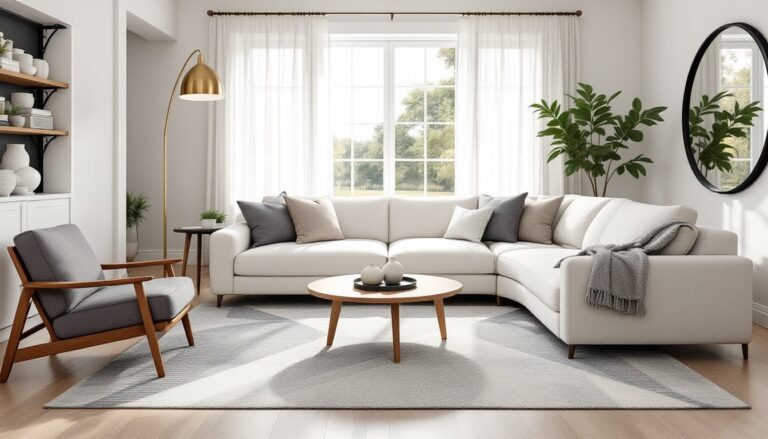
- Monochrome boho: Layered whites, creams, and beiges with texture doing the heavy lifting.
When selecting colors for living rooms, start with the largest surfaces, walls, sofa, rug, in neutral or muted tones. Then bring in color through textiles, art, and smaller furniture pieces. This approach keeps the room grounded and prevents it from tipping into visual noise.
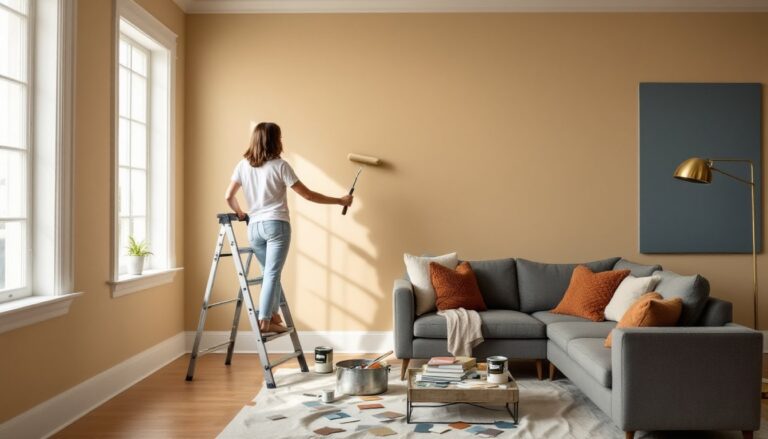
Paint tips:
For walls, choose flat or matte finishes in warm whites (like Benjamin Moore’s Swiss Coffee or Sherwin-Williams’ Alabaster) or soft terracottas. Coverage is typically 350–400 square feet per gallon, so measure carefully. If renting, removable wallpaper in a global print (ikat, suzani, or block print) can add pattern without long-term commitment.
Avoid cool grays and stark whites, they fight the warmth boho style needs.
Layered Textiles and Textures for Comfort and Warmth
Textiles are the backbone of boho design. If a room feels flat, it’s usually because there aren’t enough layers. Start with rugs, then build up with pillows, throws, and wall hangings.
Rug layering:
Use a large neutral base rug (jute, sisal, or flatweave cotton) and layer a smaller patterned rug on top, vintage Persian, kilim, or Moroccan boucherouite. The base rug should extend at least 6 inches beyond the sofa and coffee table footprint. The top rug can be smaller (5’×7′ or 6’×9′) and should contrast in texture or pattern.
Secure the edges with rug tape or gripper pads to prevent slipping, especially important on hardwood or tile.
Pillow and throw strategy:
- Mix three to five pillow patterns per sofa: one large-scale print (ikat, block print), one geometric, one solid texture (linen, velvet), and one smaller accent pattern.
- Vary pillow sizes: 22″×22″ and 20″×20″ work well together. Add a lumbar (14″×36″) for variety.
- Throws should be chunky knit, woven cotton, or fringe-edged linen, drape them casually, don’t fold into perfect squares.
Wall textiles:
Macramé wall hangings, woven tapestries, or vintage textiles hung on a dowel rod add vertical interest. Hang using picture-hanging wire or heavy-duty nails rated for the weight, most macramé pieces weigh 2–5 pounds. Mount into a wall stud when possible, or use drywall anchors rated for at least 10 pounds.
Tips for sourcing textiles include exploring thrift stores, estate sales, and online vintage shops that feature bohemian-inspired interiors.
Furniture Choices That Embrace Eclectic Boho Vibes
Boho furniture is a mix-and-match game. The goal isn’t a matching set, it’s an interesting collection that feels curated over time. Low-profile seating, natural wood, and vintage or handmade pieces are staples.
Sofa and seating:
- Choose a sofa in a neutral fabric (linen, cotton, or leather) with a low back and exposed wood legs. Avoid overstuffed, high-armed styles, they read too formal.
- Add floor seating: poufs, oversized floor cushions, or a low daybed with bolsters.
- Rattan or cane chairs (vintage or new) work as accent seating. Pair with a sheepskin throw for texture.
Coffee and side tables:
- Look for natural materials: reclaimed wood, rattan, hammered metal, or carved mango wood.
- Vary heights, stack vintage books or use a low Moroccan tray table alongside a taller side table.
- Avoid glass-top or high-gloss finishes: they’re too slick for boho’s tactile vibe.
Storage and shelving:
- Open shelving or vintage bookcases display collections without hiding them. Style with books, plants, pottery, and woven baskets for corralling clutter.
- Woven baskets (seagrass, rattan, or jute) work as both storage and decor. Stack them in corners or under console tables.
When sourcing furniture, mix new pieces with vintage finds. A mid-century credenza pairs well with a new linen sofa. A hand-carved wooden bench from a flea market adds character you can’t buy retail. For those looking to balance eclectic charm with cohesion, stylish living rooms often blend personal finds with thoughtful purchases.
Assembly tip: Most flat-pack furniture uses cam locks and dowels. Tighten cam locks with a flathead screwdriver, but don’t overtighten, you’ll strip the particleboard. If adding legs to a piece, confirm thread size (usually 5/16″ or 8mm) before ordering aftermarket options.
Natural Elements and Greenery for an Organic Touch
Boho style leans heavily on nature, not just as decoration, but as a foundational element. Plants, wood, stone, and organic shapes bring life and texture that manufactured decor can’t replicate.
Plants:
- High-impact varieties: Fiddle-leaf fig, monstera, bird of paradise (for rooms with 8+ foot ceilings and bright indirect light).
- Easy-care options: Pothos, snake plant, ZZ plant (tolerate low light, forgiving with watering).
- Trailing plants: String of pearls, philodendron, hang from macramé plant hangers or set on high shelves.
Cluster plants in odd-numbered groups (three or five) at varying heights. Use ceramic, terracotta, or woven basket planters, skip plastic unless it’s hidden in a decorative cachepot.
Watering and drainage: Most houseplants need pots with drainage holes. If using a pot without drainage, add a 1–2 inch layer of pebbles at the bottom and water sparingly to prevent root rot.
Wood and natural materials:
- Driftwood, reclaimed beams, or branches in tall vases add sculptural interest.
- Wooden bowls (mango wood, acacia, teak) on coffee tables or shelves.
- Woven wall baskets as art, hang in clusters of three to seven.
Stone and clay:
- Clay pots, ceramic vases, and stoneware dishes add earthy texture.
- A stone or ceramic planter with a large plant anchors a corner.
Avoid synthetic look-alikes. Faux plants can work in low-light spots, but stick to high-quality silk or preserved options, cheap plastic reads as clutter, not decor. For additional inspiration on integrating natural tones and organic materials, resources like Homedit offer detailed guides on nature-forward design.
Finishing Touches: Accessories and Decor That Complete the Look
Accessories make or break a boho living room. Too few, and it feels sparse. Too many, and it’s a tchotchke graveyard. The trick is curation, every item should have a reason to be there.
Art and wall decor:
- Mix framed prints, woven textiles, mirrors, and floating shelves. Avoid symmetrical gallery walls, boho thrives on asymmetry.
- Oversized mirrors (round rattan, arched wood-framed) bounce light and expand the space.
- Hang art 57–60 inches to center from the floor (standard gallery height). Use a level and painter’s tape to mock up placement before driving nails.
Lighting:
- Swap builder-grade fixtures for rattan pendants, woven shades, or Moroccan lanterns.
- Add ambient lighting with floor lamps (tripod, arc, or woven shades) and table lamps with ceramic or wood bases.
- String lights or Edison bulbs on a dimmer create warmth for evenings.
Candles and scent:
- Cluster candles in varying heights on trays (wood, brass, or ceramic). Unscented or lightly scented (sandalwood, fig, amber) work best.
- Incense holders or palo santo add ritual and scent without overpowering.
Books and collections:
- Stack vintage books (hardcover, worn spines) on coffee tables or side tables.
- Display pottery, small sculptures, or travel finds on shelves, group in threes or fives.
Decorators on platforms like MyDomaine often emphasize that curated accessories should tell a story rather than fill space. For renters or those in smaller layouts, apartment living rooms can adopt boho principles without overwhelming tight quarters.
Installation notes: When hanging heavier items (mirrors, shelves), locate studs with a stud finder and use appropriate hardware. For drywall, use toggle bolts or anchors rated for the item’s weight. A mirror over 20 pounds should anchor into studs or use two heavy-duty anchors.
Finally, if the room still feels unfinished, add one more textile layer or a large plant. Boho forgives abundance, just keep it intentional.
Conclusion
Building a boho chic living room isn’t about buying a preset look, it’s about layering textures, mixing found and new pieces, and letting the space evolve. Start with a neutral base, add natural materials and greenery, then pile on textiles and personal finds until it feels lived-in. The room should look like it took years to assemble, even if it didn’t. Trust the process, and don’t overthink symmetry, boho rewards a little creative chaos.