Table of Contents
ToggleCramming a sofa, TV console, and chairs into a 10×12 room feels like solving a Rubik’s Cube blindfolded. Every inch counts, and one wrong move leaves you bumping shins or staring at a cramped, claustrophobic box. The good news? Smart furniture selection can transform even the tightest quarters into a functional, breathable space that doesn’t sacrifice comfort or style.
This guide walks through practical picks and layout strategies to help you maximize square footage without making your living room feel like a storage unit. No fluff, just proven techniques for choosing pieces that fit, function, and look right.
Key Takeaways
- Small living room furniture must balance three critical factors: footprint, visual weight, and functionality to maximize usable space without overwhelming the room.
- Multi-functional pieces like storage ottomans, nesting tables, and lift-top coffee tables eliminate the need for bulky single-purpose items while providing hidden storage and flexibility.
- Sofas between 72–84 inches wide with low arms or no arms, paired with armless accent chairs on exposed legs, create an open visual feel in compact spaces.
- Floating furniture 12–18 inches from walls and arranging seating in L- or U-shaped conversation zones makes small living rooms feel deeper and more intentional.
- Light colors, glass or acrylic materials, and reflective finishes amplify natural light and sightlines, making even tight quarters feel airier and more spacious.
- Wall-mounted shelving, under-sofa storage, and modular cubes provide essential storage without consuming floor area, keeping clutter hidden and the room functional.
Why Furniture Selection Makes or Breaks a Small Living Room
In a small living room, there’s zero margin for error. Oversized furniture eats up floor space and blocks sightlines, making the room feel even smaller. Undersized pieces look lost and fail to anchor the space properly.
The right furniture balances three factors: footprint (how much floor area it occupies), visual weight (how heavy or bulky it appears), and functionality (how well it serves your daily needs). A bulky sectional might offer seating for six, but if it turns your room into an obstacle course, it’s the wrong choice.
Start by measuring your room dimensions, actual wall-to-wall measurements, not estimates. Account for doorways, windows, radiators, and electrical outlets. Then map out traffic flow: you need 30-36 inches of clearance for primary walkways and at least 18 inches between the coffee table and sofa. These aren’t suggestions, they’re practical minimums that keep the space livable.
Many people overlook ceiling height when selecting modern living room furniture. Low-slung pieces work well in rooms with standard 8-foot ceilings, while taller bookcases or cabinets can overwhelm the vertical space.
Multi-Functional Furniture Pieces That Do Double Duty
Multi-functional furniture isn’t new, but today’s options go way beyond the futon your college roommate had. Modern designs integrate storage, convertibility, and flexibility without looking like obvious compromises.
Storage ottomans are workhorses. They provide extra seating, a footrest, and hidden storage for throws, remotes, or kids’ toys. Look for models with removable lids and reinforced tops rated for at least 250 pounds if you plan to use them as seating.
Sleeper sofas have evolved significantly. Current models use memory foam or hybrid mattresses instead of the old bar-in-your-back mechanisms. Measure the room’s depth when the sofa is fully extended, some units need 90+ inches of clearance, which won’t work in tight spaces. Daybeds offer a slimmer alternative if overnight guests are rare.
Nesting tables slide together when not in use and pull apart for extra surface area during gatherings. They’re more versatile than a single coffee table and easier to rearrange. According to design experts at Apartment Therapy, nesting furniture ranks among the top solutions for flexible small-space layouts.
Lift-top coffee tables reveal storage compartments and raise the surface to dining or work height. They’re especially useful in studio apartments or homes without dedicated dining areas. Check the lifting mechanism, gas pistons outlast spring-loaded versions.
When shopping for apartment furniture sets, prioritize pieces that serve at least two functions. Every item should earn its footprint.
Scale and Proportion: Choosing the Right-Sized Pieces
Scale matters more than style in small rooms. A gorgeous sectional that works in a showroom can overwhelm a 150-square-foot living room.
Sofa dimensions: For small spaces, look for sofas 72-84 inches wide. Anything beyond 90 inches will dominate the room. Depth matters too, standard sofas run 36-40 inches deep, but apartment-scale models come in around 30-34 inches, freeing up valuable floor space without sacrificing comfort.
Armless or low-arm designs reduce visual bulk. A sofa with track arms or no arms at all takes up 8-12 inches less width than rolled or English arm styles. That’s enough space to add a small side table or improve traffic flow.
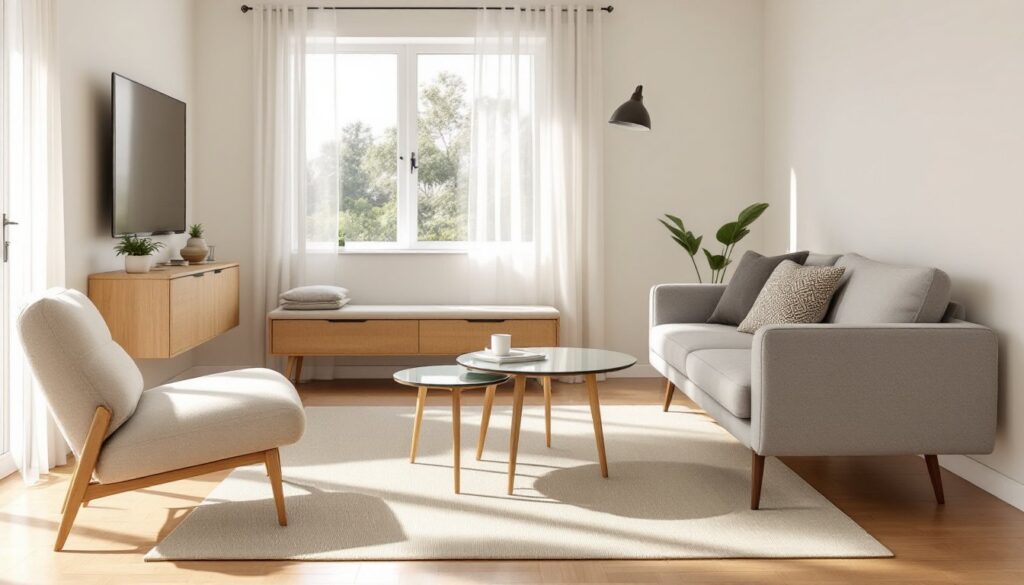
Chair selection: Skip bulky recliners. Choose accent chairs with exposed legs and open frames instead. Chairs with legs lift the visual line and create the illusion of more floor space, a trick that actually works. Aim for seat widths around 24-30 inches and depths no more than 32 inches.
TV stands and consoles: In rooms under 200 square feet, a console 48-60 inches wide is usually sufficient for TVs up to 55 inches. Wall-mounted units or floating shelves eliminate the floor footprint entirely, making the room feel more open.
Avoid matching furniture sets in small rooms. Instead, mix pieces of varying heights and profiles to create visual interest without crowding. A low-profile sofa paired with a taller bookcase creates vertical balance without eating up floor space.
Strategic Layout Ideas to Open Up Your Space
Layout determines whether a small room feels cozy or claustrophobic. Avoid the instinct to push everything against the walls, it can actually make the space feel smaller by emphasizing the room’s boundaries.
Float your furniture. Pull the sofa 12-18 inches away from the wall. This counterintuitive move creates depth and defines separate zones. The gap behind the sofa can accommodate a narrow console table for lamps or decor, adding function without clutter.
Create conversation zones. Arrange seating in an L-shape or U-shape with pieces facing each other. This layout encourages interaction and makes the room feel intentional rather than haphazard. Keep seating within 8-10 feet of each other for comfortable conversation distance.
Angle placement works well in square rooms. Position a sofa or chair at a 45-degree angle to break up the boxy feel. This works especially well in corners, where an angled chair can make awkward dead space feel purposeful.
Traffic lanes should flow naturally. Map out where people will walk when entering the room, moving to seating, or accessing other areas. Keep these paths clear and at least 30 inches wide. In narrow rooms, consider placing seating along one long wall with a slim console or bookcase on the opposite side.
For more layout ideas tailored to compact footprints, exploring living room seating arrangements can offer fresh perspectives on arranging furniture for both flow and function.
Storage Solutions Hidden in Plain Sight
Clutter kills the illusion of space faster than anything else. Built-in or hidden storage keeps daily necessities accessible without visual chaos.
Furniture with integrated storage: Choose sofas with storage compartments under the cushions or inside the arms. Some sectionals offer hidden cubbies in the chaise portion, perfect for storing seasonal items or extra linens.
Wall-mounted shelving capitalizes on vertical space without consuming floor area. Floating shelves above the sofa or flanking a TV create display and storage space. Keep them 12-18 inches deep to hold books, bins, or decor without protruding too far.
Modular storage cubes stack and configure in multiple ways. Units from brands featured on IKEA Hackers show how basic cube systems can be modified with doors, baskets, or custom inserts to fit specific needs. They’re also easy to reconfigure as needs change.
Behind-the-door storage often gets overlooked. Over-the-door racks or hooks can hold throws, bags, or small items. In living rooms with closets, maximize that space with organizers or slim storage units.
Bench seating with lift-top storage works well under windows or along walls. These pieces provide seating, storage, and can double as a room divider in open layouts.
When reviewing living room sets furniture options, prioritize collections that include storage-integrated pieces. Coordinated sets with built-in storage simplify shopping and ensure visual cohesion.
Color, Material, and Visual Tricks to Enhance Spaciousness
Furniture color and material choices significantly impact how large or small a room feels. Light colors and reflective surfaces bounce light around, making spaces feel airier.
Light upholstery in neutrals, grays, beiges, soft whites, keeps the visual palette open. Dark furniture can work in small rooms, but it requires careful balancing with lighter walls and accessories. If you prefer darker pieces, choose ones with exposed legs to maintain visual lightness at floor level.
Glass and acrylic furniture practically disappears. A glass coffee table or acrylic accent chair provides function without blocking sightlines. These materials work especially well in rooms with limited natural light.
Reflective finishes on metal legs, mirrored accents, or lacquered surfaces amplify available light. A console table with a mirrored finish or metallic legs feels less substantial than a solid wood piece of the same size.
Vertical patterns on upholstery or wall treatments draw the eye upward, making ceilings feel higher. Horizontal stripes have the opposite effect, so avoid them in small, low-ceilinged rooms.
Monochromatic schemes reduce visual clutter. When furniture, walls, and accessories stay within the same color family, the room feels more cohesive and spacious. This doesn’t mean everything must be identical, vary shades and textures within your chosen palette.
Design inspiration from Homedit frequently demonstrates how material choices influence perceived room size, with case studies showing identical layouts feeling dramatically different based solely on furniture finishes and colors.
For those seeking a polished, coordinated look, exploring stylish living rooms can provide ideas on balancing color, texture, and material for maximum visual impact in tight quarters.
Conclusion
Small living rooms demand intentional choices, but they don’t require sacrifice. Measure carefully, prioritize multi-functional pieces, and keep scale appropriate to the space. Float furniture to create depth, integrate storage wherever possible, and use color and materials to enhance openness. Every decision, from sofa size to shelf placement, should serve both function and flow. Done right, a compact living room can feel just as comfortable and inviting as a sprawling one, without the wasted square footage.