Table of Contents
ToggleA camel-colored sofa isn’t just a piece of furniture, it’s a flexible foundation that works with nearly any design direction. The warm, neutral tone sits somewhere between tan and cognac, making it adaptable enough for modern minimalists and traditional decorators alike. Unlike stark white or dark charcoal sofas that demand a specific palette, a camel sofa plays well with bold jewel tones, soft pastels, earthy greens, and crisp blacks. It brings warmth without overwhelming a space, and it hides everyday wear better than lighter upholstery. Whether designing a room from scratch or refreshing an existing layout, a camel sofa offers the kind of versatility that makes decorating decisions easier, not harder.
Key Takeaways
- A camel sofa serves as a versatile, warm neutral foundation that works seamlessly with modern, mid-century, Scandinavian, bohemian, and traditional design styles without demanding a specific color palette.
- Pair your camel sofa with complementary color palettes such as cream and soft gray for a calm look, darker tones like navy or charcoal for drama, or earth tones like terracotta and olive for a layered, organic feel.
- Layering textures through varied fabrics, rugs, pillows, and throws transforms a camel sofa setup from flat to visually rich—mix leather with linen, velvet with jute, and swap seasonal fabrics to maintain depth and interest.
- Strategic furniture placement differs by room type: float the sofa in open-concept spaces with a large rug anchor, push against walls in smaller rooms to maximize floor space, or center it facing a fireplace for traditional conversation-focused layouts.
- Warm-toned lighting (2700K–3000K), natural wood accent tables, and scaled art with warm or contrasting tones enhance a camel sofa living room without overwhelming the space.
Why Camel Sofas Are the Perfect Anchor for Your Living Room
Camel sofas anchor a room without dominating it. The color reads as a true neutral, not cool, not overly warm, which gives flexibility when selecting wall colors, rugs, and accent pieces. This makes them ideal for homeowners who want a cohesive look but aren’t ready to commit to a single design style forever.
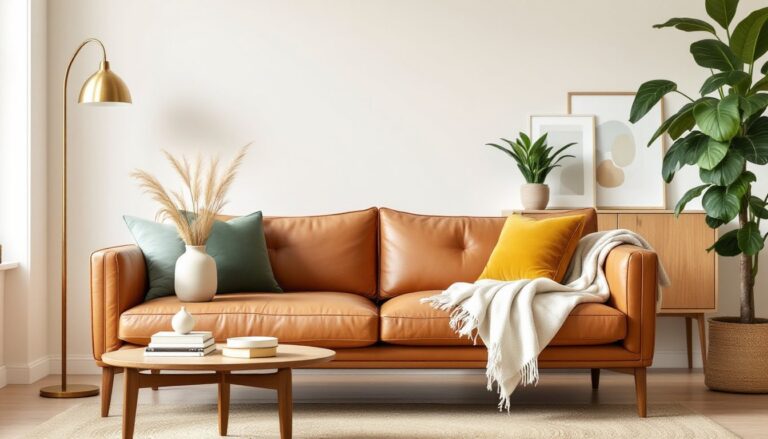
From a practical standpoint, camel upholstery is forgiving. Light enough to keep a room feeling open, but not so pale that every spill becomes a crisis. Leather camel sofas develop a rich patina over time, while fabric versions in linen or velvet offer texture that adds depth to the space.
Camel also pairs naturally with wood tones. Whether you have oak floors, walnut side tables, or reclaimed pine shelving, the sofa’s warm undertones tie wood elements together. It’s a rare color that works in both open-concept layouts and smaller, more traditional living rooms where furniture needs to do more visual lifting.
Choosing the Right Color Palette to Complement Your Camel Sofa
Start with the sofa’s undertones. Most camel sofas lean slightly warm, with hints of gold or terra cotta. That makes them compatible with a wide range of colors for living rooms, from muted sage and dusty blue to charcoal and burnt orange.
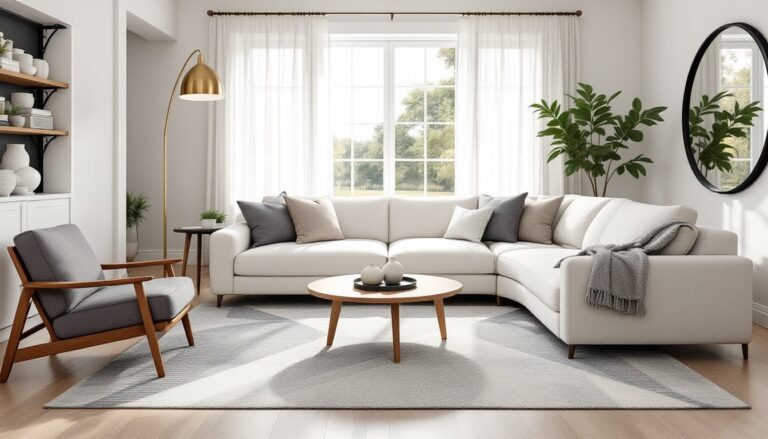
For a classic, grounded look, pair camel with cream, ivory, and soft gray. This palette feels calm and allows the sofa to be the focal point. Add texture through woven throws, linen pillows, or a chunky wool rug to keep the space from feeling flat.
If you want more contrast, go darker. Navy, forest green, or charcoal walls create drama and make the camel sofa pop. This works especially well in rooms with good natural light or in spaces where you want a cozy, enveloping feel. Balance the darker walls with lighter decor, white picture frames, pale wood furniture, or metallic accents in brass or brushed nickel.
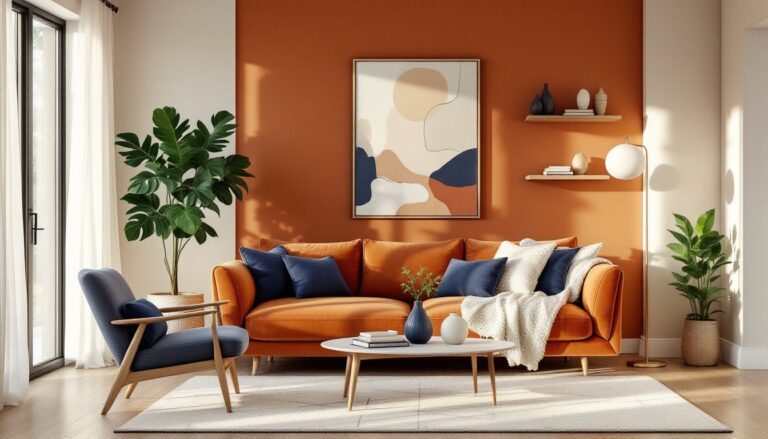
For a warmer, more layered approach, lean into earth tones. Terracotta, rust, olive, and mustard all sit comfortably next to camel. This palette feels organic and lived-in, ideal for neutral living rooms that prioritize comfort over formality. Avoid going too matchy, vary the shades slightly so the sofa doesn’t disappear into the backdrop.
Layering Textures and Fabrics for Depth and Visual Interest
A monochromatic or neutral palette can fall flat without texture. Layering materials is what keeps a camel sofa setup from looking one-dimensional.
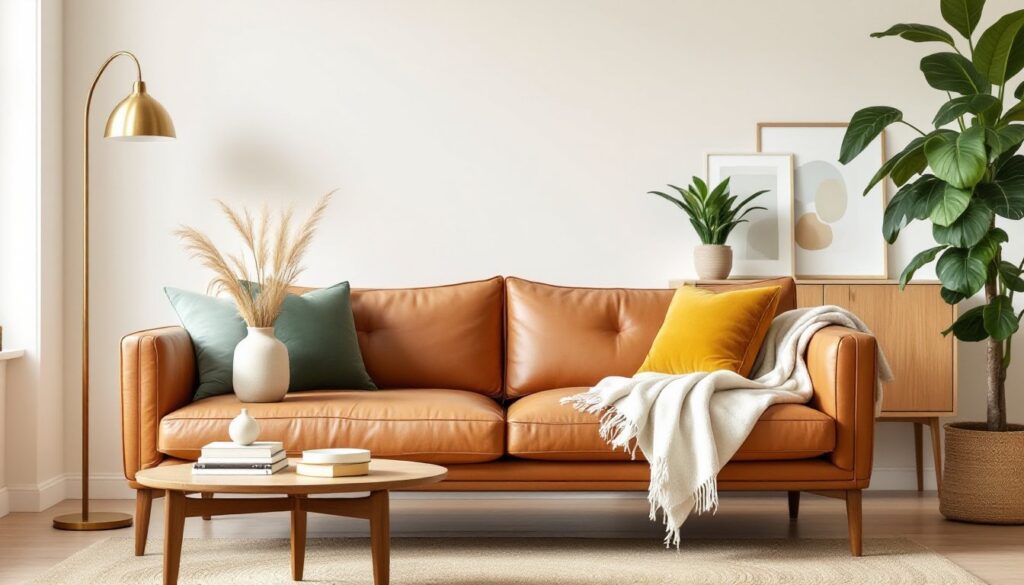
Start with the sofa itself. If it’s leather, add soft contrast with linen or cotton throw pillows and a chunky knit blanket. Leather develops character with age, but it can read as slick or cold without softer elements nearby. If the sofa is upholstered in velvet or chenille, balance the plushness with harder surfaces, marble side tables, a jute rug, or a wood coffee table with visible grain.
Rugs play a major role. A natural fiber rug (jute, sisal, or seagrass) adds texture underfoot and works in both modern and traditional spaces. For more warmth, use a vintage-style wool rug with a low pile. Avoid overly busy patterns that compete with other decor: opt for subtle geometric designs or solid tones that echo your accent colors.
Pillows and throws should vary in both fabric and size. Mix linen, velvet, wool, and faux fur in complementary tones. Use 18-inch, 20-inch, and 22-inch pillow inserts for a layered look, lumbar pillows work well on longer sofas. Swap out lighter fabrics in summer (cotton, linen) and heavier ones in winter (wool, faux shearling) to keep the room feeling fresh.
Accent Furniture and Decor That Elevate a Camel Sofa
Accent pieces should either complement the sofa’s warmth or provide intentional contrast. Avoid matching everything too closely, variation in tone and material adds personality.
For coffee tables, wood is a natural fit. A live-edge walnut or oak table ties into the camel’s warm undertones. If you want contrast, go with a black metal frame with a glass or marble top. This works well in modern living rooms where clean lines and mixed materials are the goal.
Side tables don’t need to match the coffee table. Mismatched pieces add character, especially in eclectic or transitional spaces. A brass or gold-finished side table brings a touch of warmth and reflects light, which is useful in darker rooms. According to MyDomaine, layering metals, like pairing brass lamps with black iron shelving, creates a curated, intentional look.
When selecting lighting, consider how the fixture interacts with the sofa’s color. Warm-toned bulbs (2700K–3000K) enhance the camel’s richness, while cooler bulbs can make it look washed out. Floor lamps with fabric or rattan shades soften the light and add another layer of texture. Pendant lights or chandeliers in matte black or aged brass provide visual weight above the seating area.
For wall decor, large-scale art with warm tones or natural subjects (landscapes, abstracts in rust and ochre) ties the room together. Black-and-white photography offers contrast without color competition. Keep frames simple, thin black or natural wood, so they don’t distract from the art itself.
Living Room Layout Ideas for Camel Sofas
The layout depends on room size, traffic flow, and how the space is used. A camel sofa works in most configurations, but placement affects how the room feels.
In an open-concept layout, float the sofa away from the walls to define the living zone. Anchor it with a large rug (at least 8′ x 10′ for a standard living room) so the front legs of all seating rest on the rug. This creates a cohesive conversation area. Place a console table behind the sofa to add a visual boundary without blocking sightlines.
For smaller rooms, push the sofa against the longest wall to maximize floor space. Pair it with a compact armchair or two poufs instead of a full loveseat. Use a round coffee table (30–36 inches in diameter) to improve traffic flow, round tables take up less visual space and reduce the risk of bumped shins.
In traditional layouts, center the sofa facing the fireplace or TV. Flank it with matching side tables and lamps for symmetry. Add a pair of accent chairs opposite the sofa to complete the square. This setup works well for living room seating arrangements that prioritize conversation over screen time.
If working with an L-shaped room or an awkward corner, consider pairing the camel sofa with a sectional extension in a complementary neutral (charcoal, cream, or gray). This fills the space without creating dead zones. Just make sure there’s at least 18 inches of clearance between furniture for easy movement.
Styling Camel Sofas for Different Design Aesthetics
Camel sofas adapt to nearly any style with the right supporting cast.
Modern Minimalist
Keep lines clean and clutter minimal. Pair the sofa with a low-profile coffee table in glass or polished concrete. Use a monochromatic palette, whites, grays, and blacks, with the camel as the only warm element. Limit accessories to one or two statement pieces, like a large abstract painting or a sculptural floor lamp. Stick to simple, geometric shapes.
Mid-Century Modern
This is where camel sofas shine. Pair with tapered-leg wood furniture in walnut or teak. Add a vintage-inspired rug in mustard, olive, or burnt orange. Use ceramic or brass accents, table lamps with cone shades, a sunburst mirror, or a teak credenza. Keep the vibe playful but refined. Homedit often highlights mid-century setups that lean into warm wood tones and organic shapes, both of which complement camel upholstery.
Scandinavian
Go light and airy. Pair the camel sofa with white or light gray walls and natural wood floors. Use a cream or light gray rug and stick to a neutral palette with occasional black accents. Add greenery, fiddle-leaf figs, snake plants, or eucalyptus branches, to bring life into the space. Keep decor minimal and functional: a simple pendant light, a wool throw, a few ceramic vases.
Bohemian
Layer, layer, layer. Mix patterns, kilim pillows, macramé wall hangings, and a Moroccan-style rug. Use warm tones like terracotta, burnt sienna, and ochre. Add plants in woven baskets, and don’t shy away from vintage or handmade decor. The camel sofa grounds the eclectic mix and keeps it from feeling chaotic. According to Domino, successful boho spaces balance busy patterns with solid, grounding elements, exactly what a camel sofa provides.
Traditional/Transitional
Pair the sofa with more formal furniture: a tufted ottoman, a wingback chair, or a classic wood coffee table with turned legs. Use richer colors, deep greens, burgundy, or navy, and layer in traditional textiles like damask or plaid. Brass or bronze hardware, framed mirrors, and table lamps with fabric shades round out the look. This approach works well when updating stylish living rooms that lean classic but need a refresh.
Conclusion
A camel sofa is one of the most versatile investments for a living room. It plays well with a wide range of colors, textures, and styles, and it ages gracefully with the right care. Whether going minimal, mid-century, or maximalist, this warm neutral holds its own without demanding the spotlight. Focus on layering textures, balancing contrast, and choosing accent pieces that reflect how the space is actually used. The result is a living room that feels intentional, comfortable, and easy to adapt as tastes or needs change.